
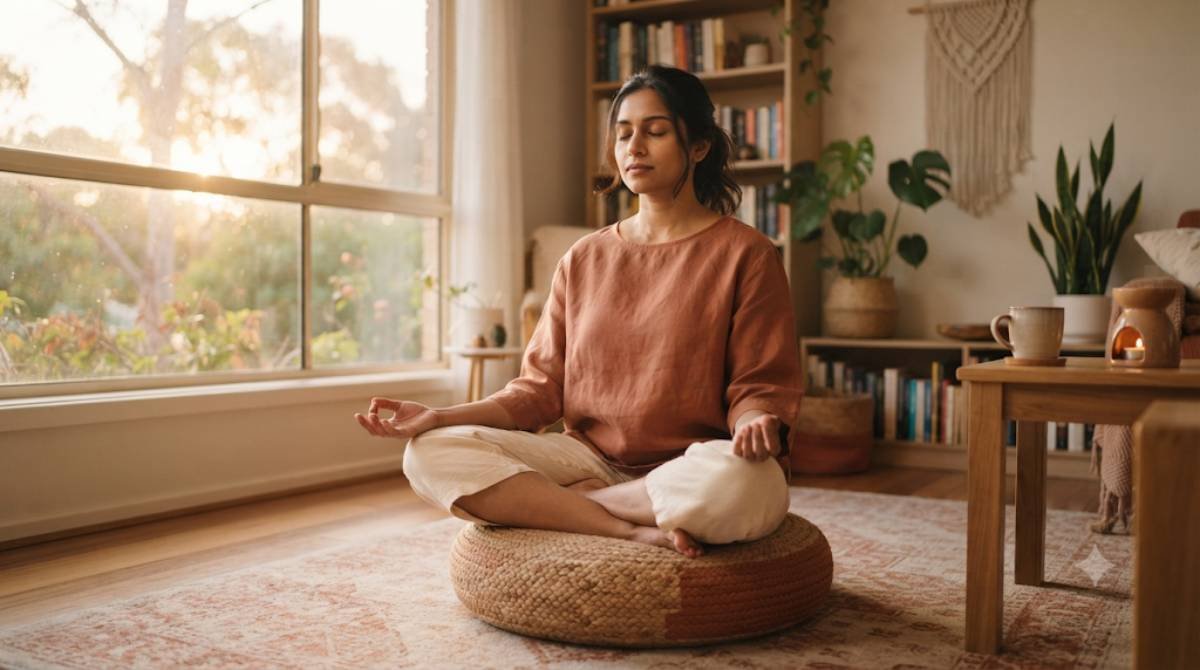
If you are searching for how to meditate for beginners, here is the plain answer: sit comfortably, rest your attention on your breath for a few minutes, and each time your mind wanders, notice it and gently come back. That is the whole practice. It sounds almost too simple, and that is exactly why so many people think they are doing it wrong. They are not. A wandering mind is the raw material of meditation, not a sign of failure.
This guide walks you through a ten-minute routine, the common mistakes, what research and public health sources actually say, how the old Indian texts describe the practice they call dhyana, and how to make the habit stick. It is written for general education. It is not medical advice, and meditation is not a replacement for care from a qualified professional.
The short version
- Start with 5 to 10 minutes a day, at a time you can repeat, in a quiet and comfortable spot.
- Rest attention on the breath. When your mind drifts, notice it and return. Each return is one repetition, like lifting a weight.
- Do not aim for a blank mind. The NHS says plainly that a wandering mind is a natural part of meditation.
- Evidence is mixed and often early. Meditation is generally considered low-risk, but it is not for everyone in every situation.
- If meditation makes you feel worse, stop and speak with a qualified professional.
Table of Contents
What meditation actually is
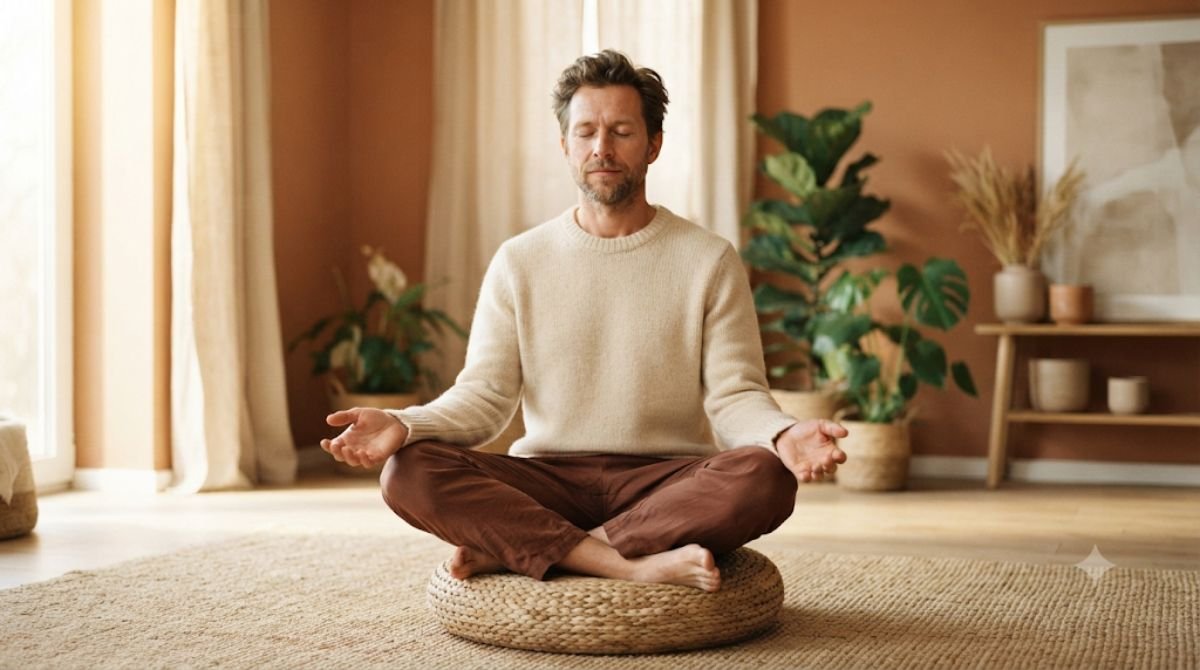
Meditation is a family of practices that train attention and awareness. The US National Center for Complementary and Integrative Health (NCCIH) describes it as a group of mind and body practices, often used to calm the mind and support well-being. Some forms focus on the breath, a sound, or a repeated word called a mantra. Others, such as mindfulness, ask you to pay attention to the present moment without judging it.
The Mayo Clinic lists several common types: guided meditation, mantra meditation, mindfulness meditation, and movement-based practices such as yoga, tai chi and qigong. Despite the different names, most share four elements. There is a focus of attention, relaxed breathing, a quiet setting if you can find one, and a comfortable position.
For a beginner, that means you do not need to pick the perfect style. You need one simple method that you can repeat. Breath-focused mindfulness is the most common starting point, because the breath is always with you and needs no equipment.
How to meditate for beginners: a 10-minute routine
Here is a routine based on the beginner guidance published by the NHS and the Mayo Clinic, written in our own words. Use it as a starting frame, then adjust it to what feels workable.
- Choose a time. Pick a slot you can repeat, such as right after you wake or just before bed. Consistency matters more than length.
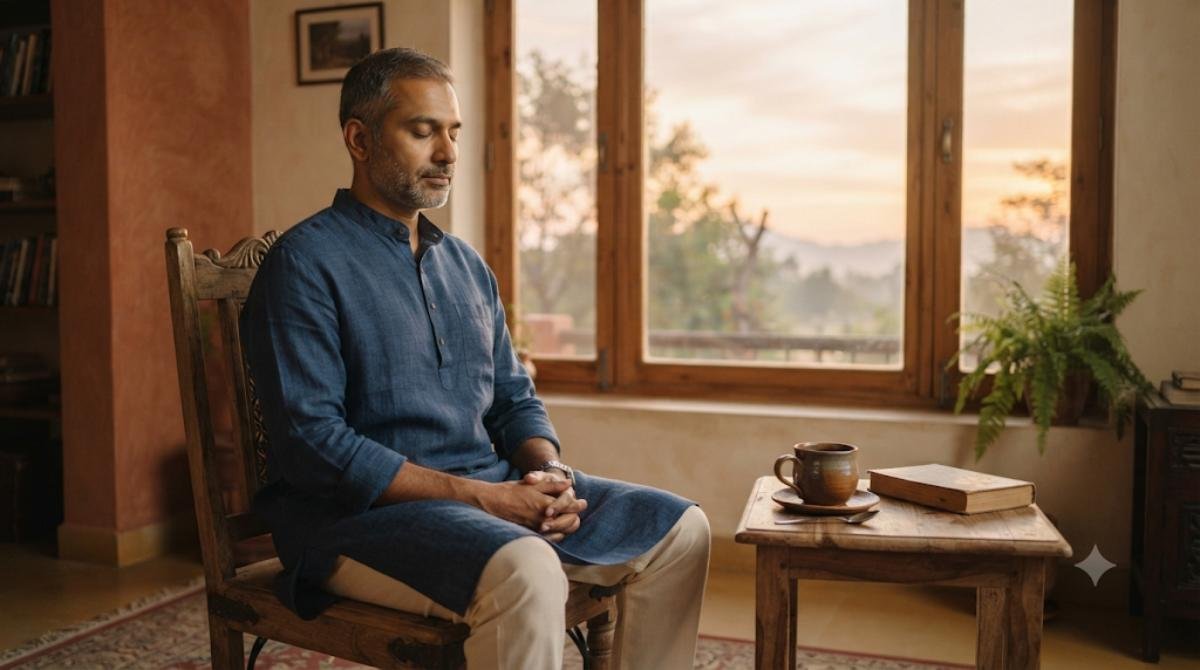
- Find a seat. Sit on a chair, a cushion or the edge of a bed with your back upright but not stiff. You do not need to cross your legs.
- Set a timer for 10 minutes. If that feels long, begin with five. A gentle alarm means you will not keep checking the clock.
- Close your eyes or soften your gaze. Notice the contact of your feet, your hands, the chair under you.
- Follow the breath. Feel air entering and leaving. You can silently say “in” and “out” as the NHS suggests. Do not try to change the breath.
- Notice when you wander. At some point you will be planning dinner or replaying a conversation. That moment of noticing is the practice.
- Return without scolding. Bring attention back to the breath. Be as kind as you would be to a puppy learning to sit.
- Finish slowly. When the timer ends, stay seated for a minute with your eyes closed, then open them and wait a little before you stand up.
What to expect in your first weeks
Most beginners report the same things. The first sessions feel restless. Your mind seems louder than usual, which is often because you are finally noticing how busy it already was. Some days feel calm and others feel scattered. Both count.
A useful way to think about it is training a muscle. Attention drifts, you notice, you return. That cycle of noticing and returning is the repetition. A session with fifty wanders and fifty gentle returns is a strong session, even if it did not feel peaceful.
Give yourself at least two weeks of regular practice before judging whether the method suits you. If sitting still feels impossible, try a walking version, or a guided audio recording from a trained teacher. Mayo Clinic notes that you can sit, lie down or walk, as long as you are comfortable and keep good posture.
Common mistakes and gentle fixes
Trying to stop thoughts. Meditation is not thought removal. Think of thoughts as traffic passing outside a window. You are not stopping the cars. You are choosing not to chase each one.
Judging the session. “That was a bad one” is just another thought. Notice it, and return.
Practising too long too soon. A strained thirty-minute session teaches you to dread the cushion. Ten steady minutes beat an occasional long one.
Forcing a posture. Pain is a distraction, not a discipline. Support your back, use a cushion, or sit on a chair.
Meditating only when stressed. It helps to practise on ordinary days so the habit is already there when you need it.
Expecting a quick fix. Mindful attention is a skill that grows slowly. Treat it like learning an instrument.
What the research says, honestly
Meditation is popular partly because the early research sounded exciting. The more careful reading is more modest, and it is worth knowing that before you start.
NCCIH summarises the evidence by topic, and the wording is cautious. For anxiety and depression, a 2018 analysis found that mindfulness approaches did better than no treatment and about as well as some evidence-based therapies. A 2021 analysis of anxiety disorders found mixed short-term results and no lasting effect at longer follow-up. For stress, NCCIH says the research is often preliminary or not scientifically rigorous. For sleep, mindfulness improved sleep quality more than education-based approaches, but not more than cognitive behavioural therapy or exercise. For blood pressure, high-quality studies are few, and the American Heart Association has described a possible benefit.
In plain terms: meditation may help some people with some things, and it is a reasonable low-cost habit to try. It is not a proven treatment for any condition, and it is not a reason to delay seeing a healthcare professional. NCCIH says exactly this: do not use meditation to replace conventional care or to delay seeing a provider.
Key takeaway
Think of meditation as practice for attention, not a treatment. The honest case for it is modest but real: it is cheap, it carries few risks for most people, and it may help you pause before reacting.
Is meditation safe for everyone?
NCCIH says meditation is usually considered to carry few risks, but it also says few studies have looked for harm, so firm safety conclusions are not possible. A 2020 review of 83 studies found that about 8 percent of participants reported a negative effect, a rate similar to that seen with psychological therapies. Anxiety and depression were the most common complaints.
Mayo Clinic adds that meditation can sometimes worsen symptoms in people with certain mental health conditions and advises talking to a healthcare professional about whether it is appropriate for you.
What this means in practice:
- If you live with a mental health condition or a history of trauma, speak with your doctor or therapist before starting, and consider a teacher with relevant training.
- If a session brings up distress that does not settle, stop, move your attention to something external such as sounds in the room, and reach out for professional support.
- Ask about a teacher’s training and experience if you join a class or programme, as NCCIH suggests.
The Vedic roots: dhyana in the old texts
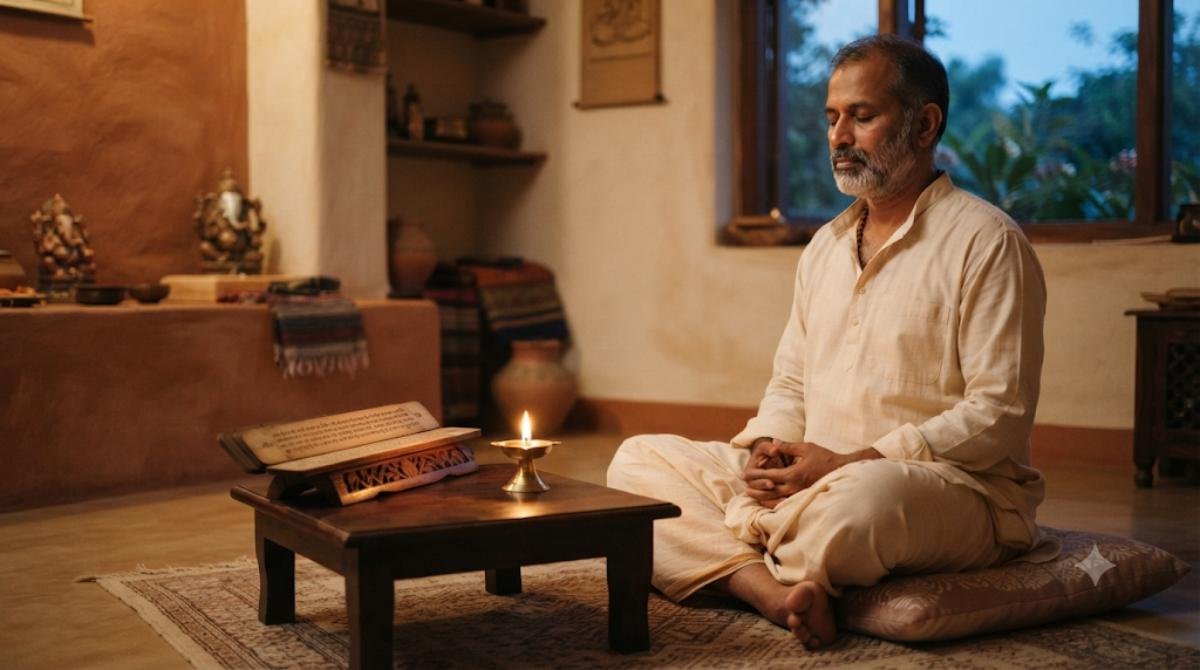
Long before modern apps, Indian texts described meditation as dhyana. The word appears in the Bhagavad Gita, which gives its sixth chapter the title of the yoga of meditation. We use it here as a window into tradition, not as a medical claim.
The Gita, in verses 6.10 to 6.12, describes sitting in a clean, quiet place on a steady seat and training the mind and senses. In verses 6.13 and 6.14, it asks the practitioner to keep the body, neck and head upright and still, to stay calm, and to hold the mind in single-pointed attention. A commentary on that passage cites the Yoga Sutras phrase sthira-sukham asanam, a seat that is steady and comfortable. That echoes what the NHS and Mayo Clinic say today about a comfortable position.
The same chapter, in verses 6.16 and 6.17, says yoga is not for those who eat or sleep too much or too little, and that balanced eating, sleeping, recreation and work suit the practitioner. The tradition is saying what modern advice says: meditation sits inside a balanced day, not apart from it.
If you enjoy sound, our guide to Om chanting and the post on Vedic chanting and stress look at mantra-based practice. The tradition says mantra can steady attention, but remember that the Vedas are spiritual and cultural texts, not a medical manual.
Three simple methods to try
You do not need to master them all. Pick one for two weeks.
1. Breath awareness
This is the routine above. It is the best first method because it needs nothing and teaches the core skill. If you want a more structured pattern, try the gentle alternate nostril breathing guide or our new box breathing guide to settle first, then sit quietly for a few minutes.
2. Body scan
Lie down or sit and move your attention slowly from your feet to your head, noticing sensations without trying to change them. It is useful when thoughts are loud, because the body gives your mind a concrete task. For a longer, guided variation, see our Yoga Nidra guide.
3. Mantra or counted breath
Silently repeat a simple word or count breaths from one to ten, then start again. Mayo Clinic lists mantra meditation as a standard method. Counting gives the mind something to hold and makes it easy to notice when you have drifted.
A simple weekly plan for beginners
| Week | Length | Focus | One question to ask yourself |
|---|---|---|---|
| Week 1 | 5 minutes | Breath awareness | Could I notice when my mind drifted? |
| Week 2 | 7 minutes | Breath awareness | Did I return without scolding myself? |
| Week 3 | 10 minutes | Breath plus body scan | What does my body feel like right now? |
| Week 4 | 10 minutes | Your choice of method | Which method do I actually look forward to? |
Do not worry if you miss a day. Start again the next day. Missing a day is not failure, it is a Tuesday.
Making it a habit
Habits stick to routines, not willpower. Here are small ways to anchor the practice.
- Stack it. Attach meditation to something you already do, such as right after brushing your teeth. Our Ayurvedic morning routine shows a gentle way to build a morning rhythm.
- Make the first step tiny. Sit down and take three breaths. You can always continue.
- Keep the spot ready. A cushion or chair that always stays in the same corner removes friction.
- Track lightly. A tick on a calendar is enough. Do not turn it into a score.
- Respect your evenings. If mornings are chaotic, practise at night. The Ayurvedic bedtime routine offers a calm wind-down you can pair with a few minutes of quiet sitting.
The tradition has a name for a favourable early hour, Brahma Muhurta, covered in our Brahma Muhurta guide. It is not required. Practise when you will actually show up.

A five-minute reset for busy days
Some days you will not find ten quiet minutes. That is fine. A short reset still trains the same skill, and it fits into real life: a parked car, a lunch break, the minute before a meeting.
- Put both feet on the floor and let your shoulders drop.
- Take three slow breaths, feeling the belly and ribs move.
- For the next two minutes, count each exhale from one to ten, then begin again.
- When you lose count, simply start again at one. No penalty.
- Before you stand, notice one sound, one sensation and one colour in the room.
Short resets are not a substitute for a longer practice if you enjoy one, but they keep the habit alive when life is loud. Many beginners find that these small pauses are what they use most often.
What meditation is not
It is not a cure, a medical treatment or a replacement for therapy, medication or professional advice. It is not a guarantee of calm. It is not a test of spiritual worth. It is not necessary to adopt any religion or belief to try it. It is also not a reason to ignore symptoms that persist. If low mood, anxiety, poor sleep or pain are affecting daily life, please speak with a qualified professional. If you ever feel unsafe, contact local emergency services.
If your mind spins around a worry, our article on why overthinking never stops looks at it through a traditional lens, and again, it is educational reading rather than treatment.
Questions people ask
How long should a beginner meditate each day?
Start with five to ten minutes. The NHS guide suggests around twenty minutes for a full session, but any routine you can repeat is fine. Short, regular sessions are easier to sustain than occasional long ones, so build up gradually if you wish.
What is the best time to meditate?
The best time is one you can repeat. Many people choose the morning, before the day fills up, or the evening, to wind down. The NHS suggests the start or end of the day. Traditional texts favour the quiet early hours, but nothing requires it.
Do I have to clear my mind?
No. A blank mind is not the goal. The NHS notes that a wandering mind is a natural part of meditation. The skill is noticing that you have wandered and returning your attention, calmly, as many times as needed.
Can I meditate lying down?
Yes, but you may fall asleep. Mayo Clinic says you can sit, lie down or walk, as long as you are comfortable and keep good posture. If your aim is to stay alert, try sitting upright on a chair.
Does meditation work for anxiety or sleep?
Research is mixed. NCCIH reports that some analyses found benefits for anxiety and sleep, others found results similar to existing therapies, and some found no lasting effect. It may help some people, but it is not a treatment. If anxiety or poor sleep is persistent, speak with a qualified professional.
Is it normal to feel worse at first?
Some people feel restless or emotional when they begin, because they notice what was already there. But if distress is strong or does not settle, stop, and speak with a healthcare professional or a trained teacher. NCCIH notes that around 8 percent of participants in a large review reported a negative effect.
Further reading
Trusted sources
- NCCIH: Meditation and Mindfulness: Effectiveness and Safety
- NHS: How to meditate for beginners
- Mayo Clinic: Meditation, a simple, fast way to reduce stress
- Wisdom Library: Bhagavad Gita 6.13 to 6.14 with commentaries
- Vedabase: Bhagavad Gita chapter 6, Dhyana-yoga
More from MyHealthLogy
- Om Chanting Benefits
- Yoga Nidra Benefits
- Ayurvedic Morning Routine for Beginners
- Brahma Muhurta Benefits
Last reviewed: 15 November 2026.
This content is for general education. It is not medical advice. If symptoms persist or worry you, please speak with a qualified professional.
3 thoughts on “How to Meditate for Beginners: A Calm 10-Minute Guide”