
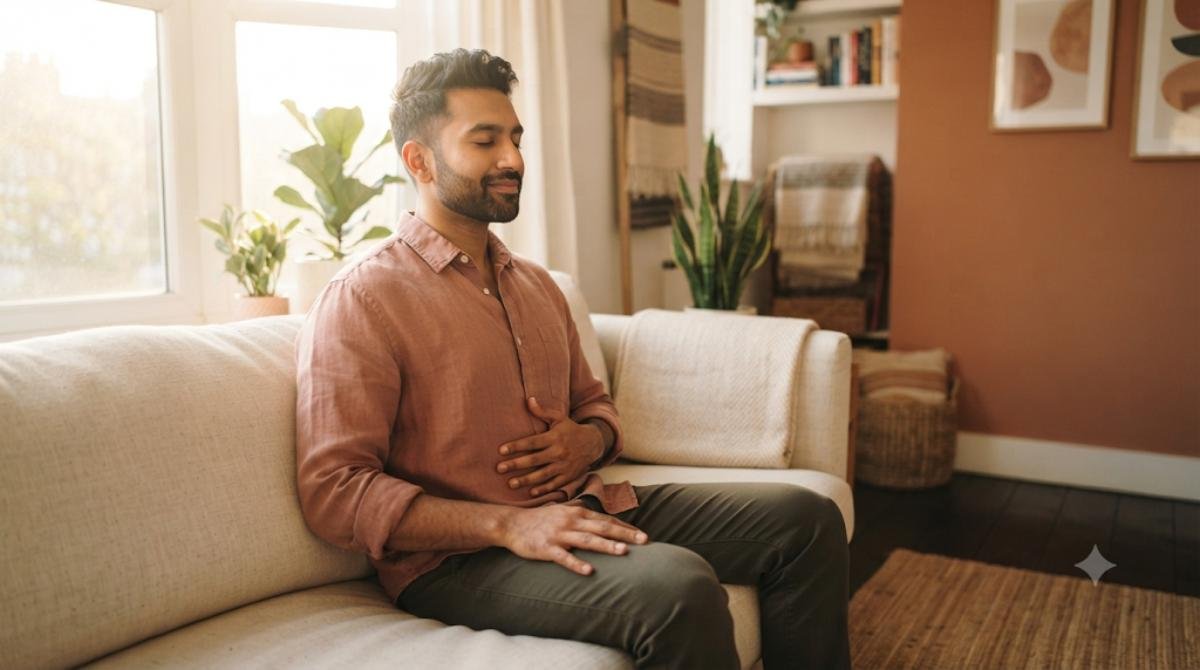
Box breathing is a simple pattern of slow breathing in four equal parts: breathe in for four counts, hold for four, breathe out for four, and hold again for four. Picture tracing the four sides of a square with your breath. It takes no equipment, no experience and no more than a couple of minutes, which is why it is such a popular first breathing exercise for people who feel tense.
This guide explains how to do box breathing step by step, what the research can and cannot tell us, who should be careful, how the idea connects to the old Indian practice of pranayama, and how to fit it into a normal day. It is written for general education. It is not medical advice.
The short version
- Box breathing is a 4-4-4-4 pattern: inhale, hold, exhale, hold, each for a count of four.
- Do three to four rounds once or twice a day, including on calm days so it feels familiar when you are stressed.
- Research on slow breathing is encouraging but small and varied. Box breathing itself has little direct study.
- Keep it gentle. Never strain, never force a long hold, and stop if you feel dizzy or anxious.
- It is a relaxation habit, not a treatment. Persistent symptoms deserve a conversation with a qualified professional.
Table of Contents
What is box breathing?
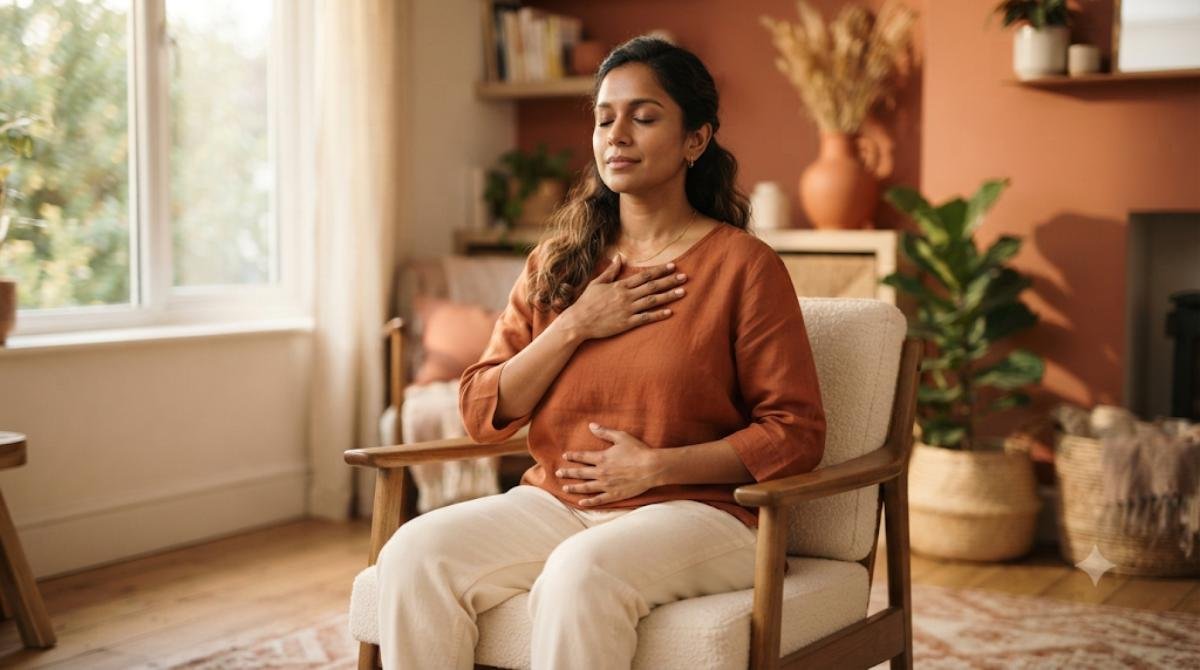
Box breathing, sometimes called square breathing, is a paced breathing exercise. You divide one breath cycle into four equal sides: inhale, hold, exhale, hold. Counting each side to four gives the technique its square shape and makes it easy to remember.
It belongs to a wider group of slow-breathing practices. The US National Center for Complementary and Integrative Health (NCCIH) describes relaxation techniques, including breathing exercises, as practices that aim to trigger the body’s relaxation response, which involves slower breathing, lower blood pressure and a slower heart rate. Breathing exercises in that family typically use slow, deep breathing, also called diaphragmatic breathing.
The appeal of box breathing is its structure. When your mind is busy, a clear count gives it something to do. That is why the technique often doubles as a small meditation. If you are new to sitting quietly, you may enjoy pairing it with our guide to how to meditate for beginners.
How to do box breathing step by step
Cleveland Clinic describes the four-count pattern in a way that is easy to follow. Here it is in our own words.
- Sit comfortably. Sit upright in a chair or on the floor, shoulders relaxed, hands resting in your lap.
- Breathe out gently first. Let the air leave slowly so your lungs feel emptied without effort.
- Breathe in through your nose for a count of four. Feel your belly and ribs expand.
- Hold for a count of four. Keep the body soft. The hold should feel easy, not tight.
- Breathe out slowly for a count of four. Let the breath leave your mouth or nose without forcing.
- Hold again, lungs empty, for a count of four.
- Repeat for three or four rounds. Then breathe normally and notice how you feel.
Practise once or twice a day, as Cleveland Clinic suggests, including when you are calm. Learning the pattern in a quiet moment makes it easier to use when stress rises.
Make it easier: tips for beginners
If a count of four feels too long, shorten it. Try three counts per side, or even two, and build up. The aim is comfort, not a perfect square. A strained breath defeats the purpose.
- Count silently. Use your own pace, not a stopwatch. A steady “one, two, three, four” in your head is enough.
- Breathe through the nose when possible. It tends to slow the breath naturally.
- Keep the shoulders down. If your shoulders rise, you are probably breathing into the chest only. Let the belly move.
- Do not force the hold. If holding feels uncomfortable, make it shorter or skip the empty hold.
- Use a visual. Trace a square with your eyes on a window frame or a picture. Many people find this keeps the mind from drifting.
- Stop if you feel light-headed. Return to normal breathing and rest.
What the research says, honestly
It is important to be clear about what is known. Box breathing has received little direct study. Cleveland Clinic’s own article leans on one linked study and on the views of an integrative medicine doctor, and it hedges the blood pressure claim with the word “maybe”. So we look to the wider research on slow breathing.
A 2018 systematic review in Frontiers in Human Neuroscience looked at 15 studies, chosen from 2,461 abstracts. It found that breathing slower than about ten breaths a minute was linked with higher heart rate variability, which reflects calming parasympathetic activity, with more alpha and less theta brain activity, and with less anxiety, depression and anger. The authors also noted gaps. Only one fMRI study was available, and the reasons why slow breathing works are still debated.
NCCIH adds some careful numbers. A 2019 review of 17 studies found that slow breathing produced a modest drop in blood pressure, but the studies varied, had short follow-up and did not measure outcomes such as heart attack or stroke. A 2019 review of three studies found preliminary signs that diaphragmatic breathing may reduce stress, with some improvements in self-rated mental health, cortisol and blood pressure. NCCIH notes that most studies in this area are small or of low quality.
Put simply, slow breathing looks promising as a relaxation habit. Box breathing is one reasonable way to practise it. It has not been proven to treat any condition, and this article does not claim that it does.
Key takeaway
Think of box breathing as a low-cost relaxation skill, not a treatment. The evidence for slow breathing is encouraging but modest, and the evidence for the box pattern specifically is thin.
Why slow breathing may feel calming
Cleveland Clinic offers a simple explanation that is presented as an expert view rather than a proven finding. Slow, even breathing may nudge the body away from the fight-or-flight state and towards the rest-and-digest state governed by the parasympathetic nervous system. When you extend your exhale and slow your pace, the heart rate often settles too.
There is also a more everyday reason. Counting is an anchor. While you are counting to four, you are not rehearsing tomorrow’s problems. That small pause is often what people notice first: not a dramatic change, but a little more room between a stressful moment and your reaction.
If your stress is constant, breathing exercises are one tool among many. Our guides on natural stress relief with Ayurveda and how to lower cortisol naturally look at sleep, food, movement and routine, which matter as much as any breath count.
Safety: who should be careful?
NCCIH says relaxation techniques are generally considered safe for healthy people, and most studies reported no negative side effects. But it also says some people notice increased anxiety, intrusive thoughts or a fear of losing control. Rarely, certain techniques may worsen symptoms in people with epilepsy, some psychiatric conditions, or a history of abuse or trauma.
Breath-holding adds one more consideration. Cleveland Clinic’s article does not name specific groups who should avoid box breathing, but it does stress staying at your comfort level, breathing gently and not straining. As a general precaution, which is ours and not a quote from one source, speak with your clinician before starting if you have a heart or lung condition, are pregnant, have high or low blood pressure, or have panic attacks that are triggered by breath awareness.
Stop and return to normal breathing if you feel dizzy, tingly, short of breath or anxious. If this keeps happening, speak with a qualified professional. NCCIH also reminds people with high blood pressure to follow their prescribed treatment and discuss any complementary approach with their provider first.
The Vedic roots: pranayama in the old texts
Breath control is far older than any modern app. In Indian tradition it is called pranayama, a word often explained as regulating prana, the vital breath. The Bhagavad Gita mentions it directly. In verse 4.29, it describes practitioners of breath control who join the inward and outward breaths, letting each merge into the other, and then hold the breath still. It also describes others who offer their vital breaths into the breaths themselves.
That verse describes a spiritual discipline in the language of sacrifice, not a medical exercise, and box breathing is a modern pattern rather than a Vedic one. Still, the common thread is striking. Both traditions pay attention to inhale, exhale and the pause between them.
If you would like a traditional breathing practice to try next, our gentle alternate nostril breathing guide explains Nadi Shodhana step by step. The tradition says such practices steady the mind. As always, the Vedas are spiritual and cultural texts, not a medical manual, and nothing here is a claim of treatment.
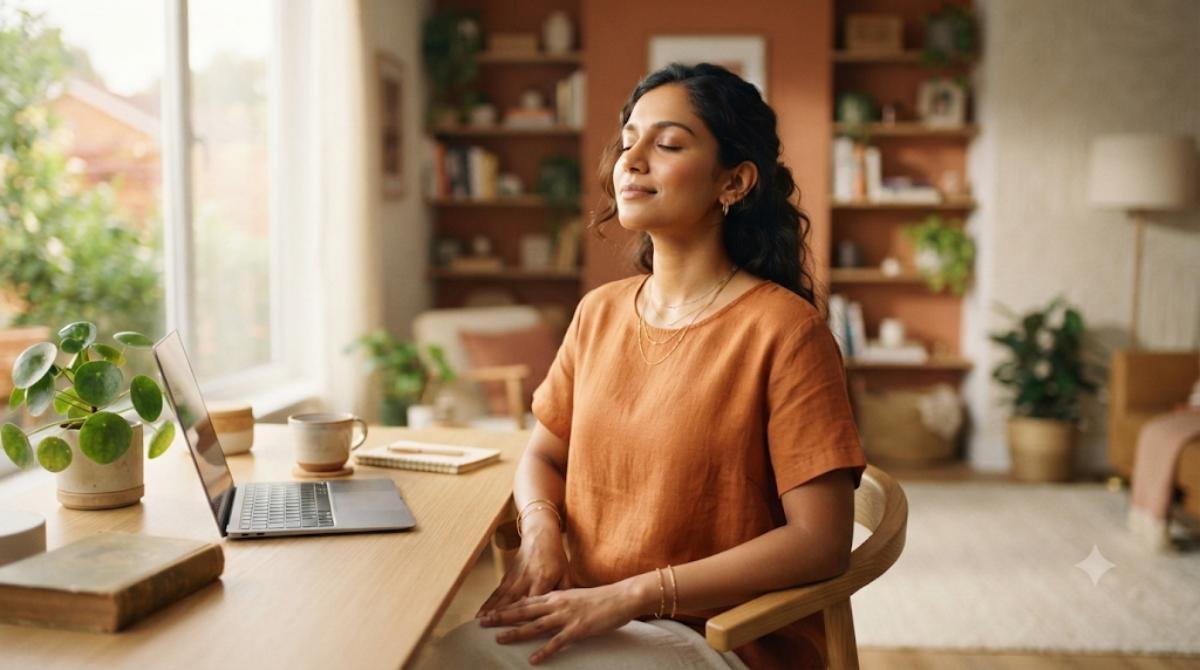
Box breathing for different moments of the day
Once the pattern feels familiar, you can use it in small, real-life moments.
| Moment | How to use it | Suggested length |
|---|---|---|
| Morning | Sit for three rounds before you check your phone | 1 to 2 minutes |
| Before a meeting | Take three slow rounds with your feet on the floor | 1 minute |
| During a stressful moment | Breathe out first, then do two rounds with shorter counts | 30 to 60 seconds |
| Midday break | Walk slowly and match steps to the count | 2 to 3 minutes |
| Before bed | Four rounds in a dim room, then lie down | 2 to 4 minutes |
For the evening, you can fold it into the calm wind-down described in our Ayurvedic bedtime routine. If sleep trouble continues for weeks, a breathing exercise is not enough, and it is worth speaking with a professional.
A simple two-week plan
Habits stick when they are small and steady. Try this gentle plan and adjust it to your own pace.
| Days | What to do | Count | Rounds |
|---|---|---|---|
| Days 1 to 3 | Practise once a day, seated, in a calm moment | 3 counts | 3 rounds |
| Days 4 to 7 | Practise morning and evening | 4 counts | 3 rounds |
| Days 8 to 10 | Add one tense moment during the day | 4 counts | 3 to 4 rounds |
| Days 11 to 14 | Choose your best time and keep it | 4 counts | 4 rounds |
Keep notes if you like. A single line such as “felt a little calmer” or “felt dizzy, shortened the hold” teaches you what suits you. If a step feels wrong, adjust it. This is your practice, not a performance.
Box breathing compared with other breathing exercises
Box breathing is one of several paced breathing patterns, and no single one is best for everyone. Knowing the differences helps you choose.
- Diaphragmatic breathing is slow belly breathing with no holds. NCCIH names it as the basic form of breathing exercise, and it is a gentle place to start if holding your breath feels uncomfortable.
- Extended exhale breathing makes the out-breath longer than the in-breath, for example four counts in and six out. Many people find it easier than a hold.
- Alternate nostril breathing is a traditional pranayama practice that switches sides with each breath and is usually taught with a calm, unhurried rhythm.
- Box breathing adds equal pauses, which makes it very easy to remember, but the empty hold is the part some people dislike.
If you try box breathing and find the holds stressful, you have not failed. Drop the holds, breathe slowly in and out, and treat that as your version. The goal is calm, steady breathing, not a particular shape.
Common mistakes to avoid
Holding the breath too hard. A tight hold sends tension through your jaw and shoulders. Keep it soft, and shorten it if needed.
Breathing too deeply too fast. Huge breaths can leave you light-headed. Aim for easy, quiet breaths.
Counting too fast. Fast counting defeats the purpose. Slow it down until it feels like a pace you could keep for a minute.
Treating it as a performance. You are not trying to win. If one round feels messy, start again.
Using it to avoid help. Breathing exercises can sit alongside professional support. They should not replace it when you need care.
What box breathing is not
It is not a cure, a medical treatment or a replacement for therapy, medication or professional advice. It is not a way to manage a panic attack or a medical emergency. It is not proven to lower cortisol or blood pressure on its own. And it is not a competitive skill. If anxiety, low mood, poor sleep or physical symptoms persist, please speak with a qualified professional. If you ever feel unsafe, contact local emergency services.
Questions people ask
What is box breathing used for?
Box breathing is used as a relaxation exercise. People use it to pause and settle during busy or tense moments. Research on slow breathing suggests possible benefits for relaxation, but it does not prove that box breathing treats any condition, so treat it as a calming habit.
How long should I do box breathing?
Three to four rounds takes about one to two minutes. Cleveland Clinic suggests practising once or twice a day. You can extend it to five minutes if you enjoy it, but short and steady is better than long and strained.
Does box breathing lower blood pressure?
Evidence is limited. NCCIH reports that a 2019 review of 17 studies found slow breathing gave a modest drop in blood pressure, but studies varied and had short follow-up. Cleveland Clinic hedges the claim with “maybe”. If you have high blood pressure, follow your prescribed treatment and talk to your provider.
Is box breathing safe for everyone?
For most healthy people, relaxation breathing is considered safe, according to NCCIH. But some people report more anxiety, and rare cases may worsen in people with epilepsy, certain psychiatric conditions or a history of trauma. If you have a heart or lung condition, are pregnant, or feel dizzy, speak with a clinician first.
Can I do box breathing lying down?
Yes. Lying down is fine, especially before sleep. If you tend to fall asleep or feel foggy, sit upright for daytime practice. Either way, keep the breath gentle and the counts comfortable.
What is the difference between box breathing and pranayama?
Pranayama is the traditional Indian practice of breath regulation, described for example in Bhagavad Gita 4.29. Box breathing is a modern four-count pattern. They share attention to inhale, exhale and pause, but pranayama has a spiritual setting and many forms, while box breathing is a simple relaxation exercise.
Further reading
Trusted sources
- Cleveland Clinic: Box Breathing Benefits and Techniques
- NCCIH: Relaxation Techniques: What You Need To Know
- Zaccaro et al., 2018: How Breath-Control Can Change Your Life (Frontiers in Human Neuroscience)
- Wisdom Library: Bhagavad Gita 4.29
More from MyHealthLogy
- How to Meditate for Beginners
- Alternate Nostril Breathing for Beginners
- Natural Stress Relief with Ayurveda
- Ayurvedic Bedtime Routine
Last reviewed: 15 November 2026.
This content is for general education. It is not medical advice. If symptoms persist or worry you, please speak with a qualified professional.
4 thoughts on “Box Breathing: How to Do It, Benefits and Safety Tips”