
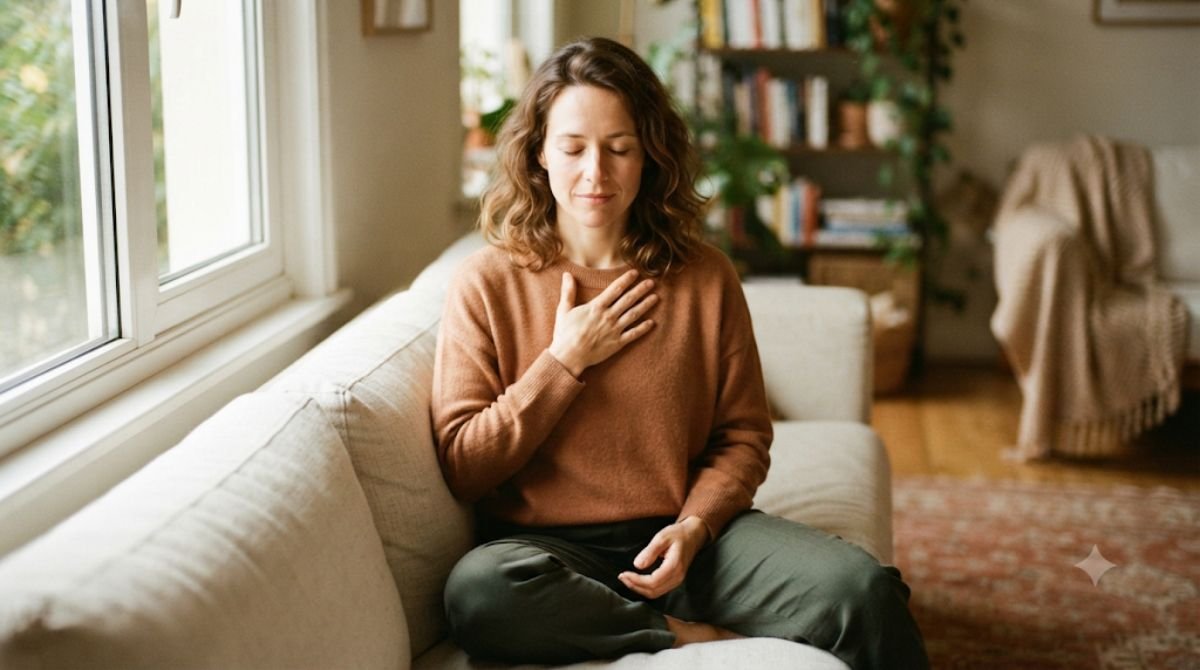
If you are searching for what to do in a panic attack, here is the short answer: stay where you are if you can, breathe slowly, and remind yourself that the wave will pass. A panic attack feels frightening, but the NHS says it is not dangerous and will not cause physical harm. Most attacks ease within minutes.
This guide explains what a panic attack is, how it can feel, how long it usually lasts, and the simple steps that the NHS and other public health sources describe, including a grounding exercise you can practise in advance. It also looks at one verse of the Bhagavad Gita on patience with passing sensations. It is written for general education. It is not medical advice, and it cannot diagnose you.
The short version
- A panic attack is a sudden surge of intense physical and mental symptoms, often without an obvious trigger.
- Most attacks last about 5 to 20 minutes, though some can last up to an hour, according to the NHS.
- During an attack: stay put if you can, breathe slowly, and remind yourself that it will pass.
- Grounding, such as the 5-4-3-2-1 method, gives your attention somewhere else to rest.
- Repeated attacks, or constant worry about the next one, are a good reason to see a GP or doctor.
Table of Contents

What a panic attack is
A panic attack is a sudden rush of fear with strong body symptoms. The NHS describes it as an intense surge of mental and physical symptoms that often comes with no obvious trigger. It can feel like losing control, or like something terrible is about to happen.
The US National Institute of Mental Health (NIMH) adds that a single or occasional panic attack is not considered a mental disorder on its own. Many people have one or two in a lifetime, often during a very stressful period.
Though it feels like danger, the NHS states that a panic attack is not dangerous and will not cause physical harm. That is worth reading twice. The sensations are real, and the fear is real, but the attack itself passes.
What a panic attack can feel like
The symptoms vary from person to person. The NHS lists a racing or pounding heartbeat, dizziness, sweating, nausea, chest pain, shortness of breath, trembling, hot flushes or chills, numbness or pins and needles, a dry mouth, a sense of dread, and feeling disconnected from your body.
NIMH gives a very similar list, and adds that people may fear that they are dying or going out of control. That fear often makes the body symptoms stronger, which can feed the cycle.
Because the symptoms overlap with other health problems, you should not guess. If you are unsure whether chest pain or breathlessness is from panic, or you have never had these symptoms before, seek medical help. The NHS says a doctor may need to rule out other causes.

How long does a panic attack last?
The NHS says most panic attacks last roughly 5 to 20 minutes, although some can last up to an hour. NIMH says attacks can last minutes to an hour or more. In both cases the peak is usually short, and the intensity falls afterwards.
It may help to know that the first few minutes are usually the hardest. If you can get through that surge without fighting it, the body tends to settle on its own.
You may feel tired, shaky or drained afterwards. That is common. Give yourself time to rest and drink some water if you can.
Panic attack, panic disorder and anxiety
These words are often mixed up, so here is a plain comparison.
| Term | What it means | Usual next step |
|---|---|---|
| Panic attack | A sudden burst of intense fear with body symptoms | Know the steps, and see a doctor if unsure |
| Panic disorder | Regular, unexpected attacks plus at least a month of worry about more | Speak with a GP or mental health professional |
| Anxiety | Ongoing worry or fear that affects daily life | Self-help, and professional support if it persists |
The NHS says panic disorder is generally diagnosed when you have regular, unexpected panic attacks followed by at least a month of ongoing worry about having more. NIMH says panic disorder is treatable, and that support can include talking therapies. Only a professional can tell you which of these applies to you.
What to do during a panic attack
The NHS gives a short list of things to do. We have put them in our own words and added the order that many people find easier to remember.
- Stay where you are, if it is safe. Moving away in a rush can make the fear grow. If you are driving or crossing a road, pull over or find a safe place first.
- Breathe slowly and deeply. Aim for a slow breath in through your nose and a slower breath out. Do not force it.
- Tell yourself it will pass. Say it silently or aloud: this is a panic attack, it is not dangerous, and it will end.
- Picture something calm. The NHS suggests focusing your mind on calm, relaxing images, such as a quiet place you know well.
- Let it run its course. Fighting the sensations often adds to the fear. Allow them to be there until they ease.
If you want a simple breathing pattern to practise when you are calm, our guide to box breathing explains one. Practising in advance makes it easier to remember in a hard moment.

Grounding: bring your attention back to the room
Grounding exercises help you shift attention away from uncomfortable thoughts and symptoms. NHS inform, Scotland’s public health information service, describes two simple ones.
The first is the 5-4-3-2-1 method. Sit comfortably and take a slow, deep breath. Then notice five things you can see, four things you can feel, three things you can hear, two things you can smell, and one thing you can taste. Go slowly and name each one.
The second is balloon breathing. Sit or stand comfortably and imagine an empty balloon in your stomach. Breathe in through your nose while counting to three, as if you are inflating it. Then breathe out slowly through your mouth, as if you are letting the air out. Repeat a few times until you feel calmer.
Neither exercise is a treatment. They are tools for steadying attention. Some people find them useful, and others find that they need a different approach. If an exercise makes you feel worse, stop and try something else.
After the attack
When the wave passes, be gentle with yourself. Sit or lie down somewhere quiet. Sip some water. Notice that you got through it.
Try to avoid going over the event again and again in your mind. The NHS says that avoiding the places or situations where attacks happened can keep the problem going, so it can help to return to normal activity at your own pace.
If you wish, write down what happened: where you were, what you felt, what helped. NHS Every Mind Matters suggests keeping a diary of activities and feelings, because it can show what sets off anxiety. A short note is enough.
Talk to someone you trust. Telling a friend or family member that you had a panic attack can make it feel less lonely.
Patience with passing sensations in the Gita
The Bhagavad Gita speaks often about steadiness. In chapter 2, verse 14, the Sanskrit begins matra-sparshas tu kaunteya. In plain words, the verse says that pleasure and pain arise from contact between the senses and the world, and that they come and go, like the changing seasons. The advice is to bear them steadily.
Seen this way, the verse offers a gentle frame for a panic attack. The sensations are strong, but they are passing. They arrive and they leave. The word the verse uses is titiksha, often translated as patient endurance.
This is a teaching from the Gita, not a medical claim. It does not treat or prevent panic attacks. And it is not an instruction to ignore your symptoms or to avoid help. But as a reminder that a surge of sensation is temporary, many readers find it comforting.

How to help someone else during a panic attack
If someone near you is having a panic attack, stay calm. Your calm presence matters more than perfect words.
Speak in short, steady sentences. Tell them that you are here, that it will pass, and that they are safe. Ask them what helps, if they know. Offer to breathe slowly with them, or to name things you both can see in the room.
Do not tell them to just calm down, and do not rush them. Give them space if they ask for it. Stay nearby until the attack eases.
Afterwards, check in without making a fuss. Ask how they are and whether they would like to talk or sit quietly. Some people feel embarrassed after an attack, so a kind, unhurried tone helps. You might also ask whether they have a plan, and offer to help them write one. Remind them, gently, that repeated attacks are worth mentioning to a doctor, and that help is available.
If they have chest pain, difficulty breathing that does not ease, or you are not sure what is happening, seek urgent medical help. It is always better to check.
When to see a doctor
See a GP or doctor if you are having symptoms of panic disorder. The NHS says this means regular, unexpected attacks, followed by at least a month of ongoing worry about having more. NIMH says to see a primary care provider or mental health professional if you have repeated attacks, ongoing fear of them, or anxiety that affects school, work or relationships.
In England, the NHS says you can refer yourself to NHS Talking Therapies for free, without seeing a GP. If you live elsewhere, your own doctor or local health service can tell you what is available.
If you feel unable to cope or keep yourself safe, get urgent support straight away. In the US, you can call or text 988. In a life-threatening emergency, call your local emergency number.
Making a small plan for next time
Many people feel calmer when they know what they will do. A short plan takes ten minutes and can sit on your phone or on a card in your bag.
Write three lines. First, the reminder you will tell yourself, such as “this is a panic attack, it will pass”. Second, the one breathing or grounding method you will try, so you do not have to choose in the moment. Third, the person you could message afterwards, if you want company.
NHS Every Mind Matters lists several self-help habits for anxiety that fit well alongside a plan. Build self-care into your daily routine, because regular practice helps. Set a fixed worry time each day, so concerns do not spread through the whole day. Keep a diary of activities and moods to see what sets off anxiety. And try to approach avoided situations step by step, since avoidance can keep anxiety going.
You can also look at a worry from a friend’s point of view. Ask yourself what you would say to someone you care about who felt this way. The answer is often kinder than what we tell ourselves.
None of this replaces professional care. If attacks keep coming, or the fear of them is shrinking your life, a GP or therapist can help you build a plan that fits you. Support is available, and asking for it is a sign of care for yourself, not of weakness.
How Ayurveda describes balance and recovery
Ayurveda does not use the term panic attack. It speaks of the mind and senses and of their balance. This section describes what the tradition says. It is not advice, and it does not recommend any practice, herb or treatment.
In the Sushruta Samhita, Sutrasthana 15.41, a healthy person is described as one whose doshas, digestive fire, tissues and waste-removal are in balance, and whose self, senses and mind are in good spirits. The Sanskrit word for that last part is prasannatmendriyamanah. It places a settled mind and senses inside the very definition of health.
From the texts
prasannātmendriyamanāḥ
Source: Sushruta Samhita, Sutrasthana 15.41
In plain words: The self, the senses and the mind in good spirits, as part of perfect health.
The Bhagavad Gita speaks of sensations that come and go. In chapter 2, verse 14, it says that contact between the senses and the world brings cold and heat, pleasure and pain, and that they arrive and depart. The verse asks the listener to bear them steadily.
Neither text is a guide to dealing with a panic attack, and neither replaces medical care. They show how the tradition frames the mind: as something that can be unsettled, and as something whose steadiness matters. If you want to explore Ayurveda alongside your own care, speak with a qualified practitioner and your doctor.
In the tradition’s words
- The Sushruta Samhita counts a settled mind and senses as part of health.
- The Gita describes sensations as passing, like seasons.
- The tradition frames steadiness as a quality to understand, not a promise of relief.
- These are teachings from the tradition, not recommendations.
Sources for this section: Wisdom Library, Sushruta on the criterion of health and Vedabase, Bhagavad Gita 2.14.
What this guide is not
This guide is not a diagnosis, and it cannot tell you whether what you feel is a panic attack. Chest pain, breathlessness and dizziness can have other causes, and only a qualified professional can sort them out.
It does not recommend any herb, supplement, medicine or treatment. It does not promise that any breathing method or grounding exercise will stop an attack. And it does not replace care from your doctor or a therapist.
The practices described here come from public health sources and one traditional text. They are educational. If your attacks are frequent or frightening, please speak with a qualified professional.
Questions people ask
What should I do during a panic attack?
Stay where you are if it is safe, breathe slowly, and remind yourself that the attack will pass. The NHS also suggests focusing on calm images. You can add a grounding exercise, such as naming five things you can see. If you are unsure that it is a panic attack, or you have chest pain, seek medical help.
How long does a panic attack last?
Most panic attacks last about 5 to 20 minutes, according to the NHS, although some can last up to an hour. The first few minutes are usually the most intense. After that, the symptoms tend to fade, though you may feel tired or shaky for a while.
Is a panic attack dangerous?
The NHS says a panic attack is not dangerous and will not cause physical harm, even though it feels frightening. Still, the symptoms can overlap with other conditions. If you have never had them before, or you are worried, get checked by a doctor.
What is the difference between a panic attack and panic disorder?
A panic attack is a sudden burst of intense fear. Panic disorder, according to NIMH and the NHS, means having recurrent, unexpected attacks, plus at least a month of worry about future attacks or changes in behaviour to avoid them. A doctor can assess which applies.
Can grounding stop a panic attack?
Grounding may help some people steady their attention, but it is not a cure and it does not work for everyone. NHS inform describes it as a way to reduce the feeling of being overwhelmed by shifting attention away from symptoms. Try it when you are calm first, so it feels familiar.
Further reading
Trusted sources
- NHS: Panic disorder
- NIMH: Panic disorder, when fear overwhelms
- NHS Every Mind Matters: Anxiety
- NHS inform: Grounding exercises
- Vedabase: Bhagavad Gita chapter 2, verse 14
More from MyHealthLogy
- Box Breathing Guide
- Burnout Symptoms
- How to Meditate for Beginners
- Alternate Nostril Breathing for Beginners
Last reviewed: 15 November 2026.
This content is for general education. It is not medical advice. If symptoms persist or worry you, please speak with a qualified professional.