High cholesterol is another silent condition. You cannot feel it, and many people only find out after a blood test or, sadly, after a heart problem. A good high cholesterol diet can make a real difference, and it does not have to mean boring food.
In this guide, we explain what cholesterol is, what the NHS advises you to eat and avoid, how traditional fats such as ghee fit in, and what Ayurveda says about balanced living. We keep tradition and science separate, and we never suggest stopping medicines.
The short version: A high cholesterol diet focuses on unsaturated fats (olive or rapeseed oil, nuts, seeds, oily fish), wholegrains, fruit and vegetables, and less saturated fat from butter, ghee, cream, cheese, fatty meat, cakes and biscuits. The NHS also advises at least 150 minutes of exercise a week, no smoking and no more than 14 units of alcohol a week. Some people also need medicine such as statins.
▶ Watch the Web Story: High Cholesterol Diet
Table of Contents
What Is Cholesterol? Good and Bad Cholesterol
Cholesterol is a fatty substance found in your blood. Your body needs some of it to build cells and make hormones. Problems start when there is too much of it, because it can build up in the walls of your arteries.
Doctors often talk about “good” and “bad” cholesterol. In simple terms, one type carries cholesterol around and can leave deposits in the arteries, while the other helps remove it. A blood test gives these numbers, and your doctor explains what they mean for you.
Why high cholesterol matters
The NHS explains that too much cholesterol can block your blood vessels, which makes you more likely to have heart problems and stroke. It does not usually cause symptoms. The only way to know you have it is a blood test. You can read more on the NHS high cholesterol page.
Who is more likely to have it
According to the NHS, you are more likely to have high cholesterol if you:
- are over 50 or are a man
- have been through the menopause
- are of South Asian or sub-Saharan African origin
- have a family history (an inherited form called familial hypercholesterolaemia can start at a young age)
- eat fatty food, do not exercise much, are overweight, smoke or drink alcohol
South Asian readers should take note. Heart disease risk is higher in this group, so it is wise to have a check even if you feel fine.
How you find out
You can ask your doctor for a cholesterol blood test. In the UK, the NHS Health Check offers this to adults aged 40 to 74. If a close relative had a heart attack young, or has very high cholesterol, tell your doctor. Do not rely on a home remedy to “check” your cholesterol.

What a high cholesterol diet plan looks like
The NHS advice on lowering cholesterol is practical. It says to eat healthily and get more exercise, and to cut back on saturated fat. In simple terms, the plan is: swap saturated fats for unsaturated ones, eat more plant foods, and move more.
Best Foods to Lower Cholesterol
- Oily fish, such as mackerel and salmon, if you eat fish
- Olive oil, rapeseed oil and spreads made from them
- Wholegrains: brown rice, wholegrain bread, wholewheat pasta, oats and millet
- Nuts and seeds in small handfuls
- Fruit and vegetables, as many colours as you can
- Pulses: dal, chickpeas, rajma, sprouts
Vegetarian readers can focus on pulses, nuts, seeds, vegetables and wholegrains. Our guide to the sattvic diet shows a plant-rich pattern that fits well.
Foods to Avoid With High Cholesterol
The NHS says to cut back on saturated fat and to check food labels. Limit:
- meat pies, sausages and fatty meat
- butter, lard and ghee
- cream and cheese
- cakes and biscuits
- foods containing coconut oil or palm oil
- deep-fried snacks and takeaways
The NHS saturated fat guidance gives general limits of about 30 g a day for men and 20 g for women.
Ghee and High Cholesterol: Traditional Fats Explained
This is the question many readers ask. The NHS lists ghee, butter and coconut oil among fats to limit for people with high cholesterol. That does not mean tradition is wrong. It means a little goes a long way. Use ghee as a flavour, such as a teaspoon on dal, and cook most food in unsaturated oil. Our guide to ghee benefits explains the numbers in detail.
High Cholesterol Diet Plan: A Sample Indian Day
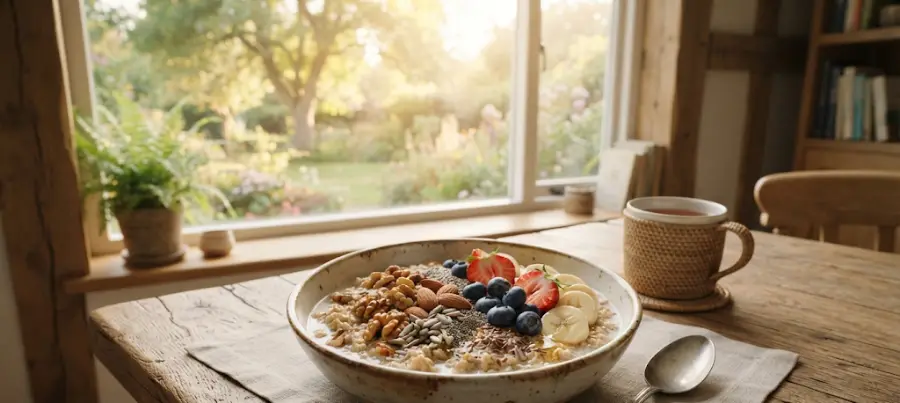
- Morning: a glass of warm water, then oats or vegetable upma with nuts and fruit
- Lunch: dal, two vegetable dishes, one wholegrain roti or a small portion of brown rice, salad, and curd if you eat dairy
- Snack: roasted chana, an apple or a handful of nuts
- Dinner: vegetable soup or khichdi cooked with a little oil, eaten early
Cook with a small amount of olive, rapeseed or another unsaturated oil. Grill, bake, steam or air-fry rather than deep fry.
Movement, weight and alcohol
The NHS advises at least 150 minutes (2.5 hours) of moderate activity a week, or 75 minutes of vigorous activity. Brisk walking, swimming and cycling are good starting points. Smoking can raise cholesterol, so ask your doctor for support if you smoke. The NHS also says not to regularly drink more than 14 units of alcohol a week.
If you are overweight, losing a little can help. Our guide to Surya Namaskar is one gentle way to move, with your doctor’s approval.
What Ayurveda and the Charaka tradition teach
Ayurveda does not use the word cholesterol, but it has long discussed heaviness, excess fat and sedentary living as sources of illness. A famous line from the Charaka Samhita states the twofold aim of the science:
स्वस्थस्य स्वास्थ्यरक्षणम् आतुरस्य विकारप्रशमनं च
svasthasya svāsthya-rakṣaṇam āturasya vikāra-praśamanaṃ ca
Charaka Samhita, Sutrasthana 30.26
Meaning: To protect the health of the healthy, and to relieve the illness of the sick.
The first aim, protecting the health of the healthy, is the heart of prevention. A regular routine, light dinners, daily movement and balanced food are all themes in Ayurvedic daily routines. This lines up with modern advice, but it is not a cure for high cholesterol. Read more in our guide to Ayurveda and the Atharvaveda.
Herbs and Supplements for Cholesterol: Be Careful
Garlic, guggul, arjuna, methi and many other herbs are often sold for cholesterol. It is important to know that the NCCIH says there are few high-quality studies of Ayurvedic treatments, and that some Ayurvedic products have been found to contain lead, mercury or arsenic. Herbs can also interact with medicines.
- Do not use herbal products instead of prescribed medicine.
- Tell your doctor about every herb and supplement you take.
- Buy from trusted, tested brands.
- Stop and see a doctor if you feel unwell after taking one.
Statins for High Cholesterol: When Medicine Is Needed
Some people need medicine, such as statins, to lower their cholesterol, especially if they already have heart disease or are at high risk. The NHS says that diet and exercise are important, and that some people need medicine as well. If you have been prescribed a statin, take it as directed, and ask your doctor about any side effects. Do not stop it because of a social media post.
Common myths
- Myth: thin people cannot have high cholesterol. They can, especially if it runs in the family.
- Myth: if I feel fine, my cholesterol is fine. It rarely causes symptoms.
- Myth: ghee is a health food that lowers cholesterol. It is a saturated fat, and the NHS lists it to limit.
- Myth: a herb can replace statins. There is no proof of this.
- Myth: only older people need to check. Family history can make it important earlier.
Fibre: the quiet helper in a high cholesterol diet
Fibre is not mentioned by name on every guide, but wholegrains, fruit, vegetables and pulses are rich in it, and they are the foods the NHS recommends. Soluble fibre, found in oats, barley, beans, lentils and some fruits, is often discussed by dietitians in connection with healthy cholesterol.
Easy ways to add fibre:
- start the day with oats, porridge or dalia
- add a handful of beans or chickpeas to salads and curries
- leave the skin on vegetables and fruit where you can
- swap white rice and refined flour for brown rice, millets and whole wheat
- eat an apple or pear instead of juice
Increase fibre slowly and drink enough water, to avoid bloating. Our guide to fibremaxxing has more tips.
Cooking methods that protect your heart
How you cook matters as much as what you cook. A high cholesterol diet is easier when you change the way food is prepared.
- Steam, boil, grill, bake or pressure-cook rather than deep fry.
- Measure oil with a teaspoon. Many curries need much less than you think.
- Dry-roast spices and nuts without oil.
- Use non-stick pans so you need less fat.
- Trim visible fat from meat and remove poultry skin, if you eat them.
- Make dal tadka with a small amount of oil instead of a large pool of fat.
These steps keep the flavour while cutting saturated fat. Over a year, small changes in the kitchen can add up to a big change in how much fat you eat.
Eating plan for vegetarians and vegans
Many readers follow a vegetarian diet for religious or personal reasons. A vegetarian pattern can be heart friendly, but be careful, as full-fat dairy, ghee, fried snacks and sweets are common sources of saturated fat.
- Choose low-fat milk and curd, or plant-based alternatives with added calcium.
- Use paneer in moderate portions and cook it with little oil.
- Rely on pulses, tofu, nuts and seeds for protein.
- Look for sources of omega-3, such as flaxseed, chia and walnuts.
- Plan for vitamin B12, which the NHS notes needs attention on a vegetarian or vegan diet.
See our sattvic diet guide for more on nutrients to watch.
Heart-friendly snacks and sweets
Snacks are where many plans slip. Here are some better choices:
- roasted chana, makhana or puffed rice with spices
- a small handful of unsalted almonds or walnuts
- fresh fruit or a fruit chaat without sugar
- sprouts salad with lemon
- unsalted popcorn
For festivals, enjoy a small piece of your favourite sweet slowly, after a proper meal. Share the rest. You do not have to refuse everything, but the habit of a big portion at every gathering is worth changing.
Questions to ask your doctor about cholesterol
If you have a high cholesterol result, a short list of questions can make your visit more useful.
- What are my numbers, and what should they be?
- Is my cholesterol high because of food, family history or another condition?
- Do I need medicine now, or can I try lifestyle changes first?
- When should I be tested again?
- Should my family members be checked?
- Is it safe for me to use any herbal products?
Write your answers down. A clear plan, agreed with your doctor, is the surest way to manage a high cholesterol diet and your overall health.
A four-week plan to improve your numbers
Changing habits is easier in small steps. This plan is for adults who have already had a cholesterol test and does not change any medicine.
- Week 1: read labels, and swap butter, ghee or cream in one daily dish for unsaturated oil.
- Week 2: add oats or another wholegrain breakfast, and a handful of nuts each day.
- Week 3: walk briskly for 30 minutes on most days, in short rounds if needed.
- Week 4: cut deep-fried foods to once a week, and plan weekly menus around vegetables and pulses.
At the end of the month, note how you feel and book a repeat test when your doctor advises. Stay patient: cholesterol changes over months, not days.
Heart health and the mind
Stress, poor sleep and low mood can lead to comfort eating and less exercise, which can raise cholesterol over time. Looking after the mind is therefore part of looking after the heart.
Simple practices such as slow breathing, a short daily walk, and a regular bedtime can help. Our guides to alternate nostril breathing, yoga nidra and natural stress relief offer calm, low-effort routines.
Tradition has long taught that a steady mind and a steady routine support health. That fits well with modern advice, as long as you also look after your food, activity and checks.
Staying motivated for the long term
The hardest part of a high cholesterol diet is not starting but continuing. These ideas can help:
- Set small, specific goals, such as “walk after dinner on weekdays”.
- Keep a simple food and walking diary.
- Cook with family so that everyone shares the habit.
- Celebrate progress that is not about weight, such as a better blood test or more energy.
- Forgive slips. One festival meal does not undo a month of good habits.
Remember that this is care for your future self. Many people find that after a few weeks, the new habits feel normal, and the old ones feel too heavy.
A note on cholesterol in children and young adults
High cholesterol is mostly an adult issue, but not only. An inherited form can appear early, and the NHS notes that it can start at a young age. If a parent or grandparent had a heart attack young, or has very high cholesterol, ask your doctor whether testing is a good idea for the family.
For children, the best habits are the same as for adults: fresh home-cooked food, plenty of play, less sugary and fried snacks, and good sleep. Avoid strict diets for children unless a doctor advises them, because growing bodies need enough energy and nutrients.
High Cholesterol Diet FAQs
What is the best high cholesterol diet?
One rich in vegetables, fruit, wholegrains, pulses, nuts and unsaturated oils, and low in saturated fat, as the NHS advises.
Can I eat ghee with high cholesterol?
A small amount, such as a teaspoon, may fit in, but the NHS advises cutting back on ghee. Ask your doctor what is right for you.
Is it safe to eat eggs?
Many people can include eggs in moderation. Ask your doctor or dietitian, especially if you have a heart condition.
How long does it take to lower cholesterol?
It varies. Many people see changes in a few months, and your doctor will repeat the blood test.
Do I need medicine?
That depends on your numbers and overall risk. Only your doctor can decide.
Further reading
This article is for general education and cultural information, not medical advice. If symptoms persist or worry you, please speak with a qualified healthcare professional. Images on this page were created with AI.