
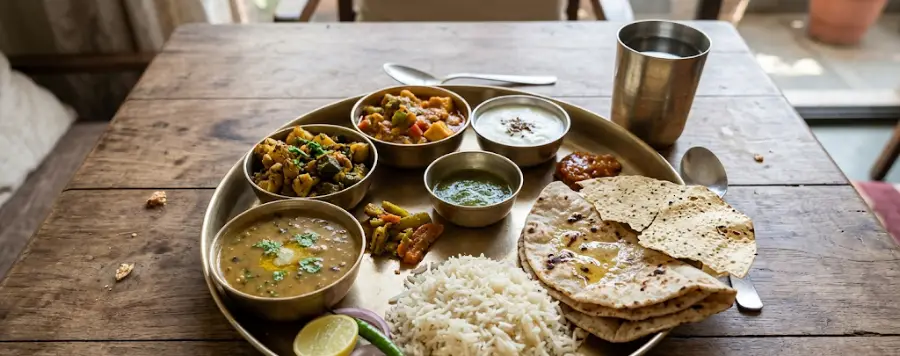
Sattvic food is simple, fresh, warm and made with care. It is the kind of meal many of us remember from a grandmother’s kitchen: dal, rice, seasonal vegetables, a little ghee and a calm place to sit. Today the sattvic diet is trending in India, the UK, the US and Europe, and people want to know what it really is.
In this guide, we explain the idea in simple words, look at what the old texts say, compare it with modern nutrition advice, and give you a practical plan. We also point out where claims go too far, so you can eat well and stay safe.
The short version: A sattvic diet is a vegetarian style of eating from the yogic and Ayurvedic tradition, built on fresh vegetables, fruit, pulses, grains, nuts, seeds, milk and a little ghee, cooked simply and eaten calmly. It matches many parts of healthy eating advice, but it can lack vitamin B12, iron and omega-3 if not planned well. It is a lifestyle approach, not a cure for disease.
▶ Watch the Web Story: Sattvic Diet
Table of Contents
What Is a Sattvic Diet? Meaning and Principles
The word sattva means purity, clarity and balance. A sattvic diet is the style of eating that tradition links with a calm, clear mind and a light, healthy body.
In simple terms, it means:
- mostly plant foods, freshly made
- simple cooking with mild spices
- little or no processed food
- no heavy, greasy or very spicy dishes
- eating at regular times, in a calm mood
It is usually vegetarian. Many versions include milk, yoghurt and a little ghee. Some strict versions avoid onion and garlic, which tradition considers stimulating. We will look at that later.
The three gunas and three kinds of food
Indian philosophy describes three gunas, or qualities, that shape nature and the mind: sattva (balance and clarity), rajas (activity and restlessness) and tamas (heaviness and dullness). Food is also grouped by these qualities:
- Sattvic food: fresh, light, nourishing. Examples: fruit, vegetables, whole grains, lentils, nuts, milk.
- Rajasic food: hot, sharp, stimulating. Examples: very spicy dishes, strong coffee, a lot of salt or sugar.
- Tamasic food: stale, heavy, over-processed. Examples: leftovers kept too long, very oily fast food, alcohol.
This is a tradition and a way of thinking about food, not a laboratory classification. Modern dietitians do not use the three gunas, but the practical advice, such as eating fresh, plant-rich, lightly cooked food and avoiding heavy junk, often agrees with modern guidance.
What the texts say about food
The Vedic literature treats food with great respect. The Taittiriya Upanishad, part of the Vedic tradition, contains the famous idea annam brahma, “food is Brahman”, meaning that food is sacred and should be honoured. Our guide to the four Vedas shows where the Upanishads fit.
The three-fold classification of food is described in the Bhagavad Gita, which is a later text of the Sanatan tradition, not one of the four Vedas. In chapter 17, it says:
आयुःसत्त्वबलारोग्यसुखप्रीतिविवर्धनाः । रस्याः स्निग्धाः स्थिरा हृद्या आहाराः सात्त्विकप्रियाः ॥
āyuḥ-sattva-balārogya-sukha-prīti-vivardhanāḥ | rasyāḥ snigdhāḥ sthirā hṛdyā āhārāḥ sāttvika-priyāḥ ||
Bhagavad Gita 17.8
Meaning: Foods that increase life, strength, health, happiness and cheer, and that are juicy, soothing, lasting and pleasant, are dear to those of sattvic nature.
You can see the idea clearly: food should support life, strength and cheerfulness, and it should be pleasant and nourishing. That is a lovely, practical definition.
Sattvic Diet Plate: What It Looks Like
Imagine your plate divided like this:
- Half: vegetables and fruit, cooked or fresh
- A quarter: whole grains, such as rice, millet, oats, whole wheat
- A quarter: pulses and protein, such as dal, moong, chickpeas, paneer or tofu
- A small extra: a few nuts, seeds, curd or a teaspoon of ghee
This pattern looks a lot like the modern advice to eat plenty of vegetables, fruit, wholegrains and pulses. Add a calm place to sit, and you have the whole sattvic idea.
Sattvic Diet Foods List: What to Eat
- fresh seasonal fruit and vegetables
- whole grains: rice, wheat, oats, barley, millet
- pulses: moong, masoor, toor dal, chickpeas, beans
- nuts and seeds: almonds, walnuts, pumpkin seeds, sesame
- milk, curd and a little ghee, if you eat dairy
- mild spices: turmeric, cumin, coriander, fennel, ginger, cardamom
- herbs such as tulsi (see our tulsi guide)
- natural sweeteners in small amounts, such as jaggery or honey
- plain water, herbal teas, buttermilk
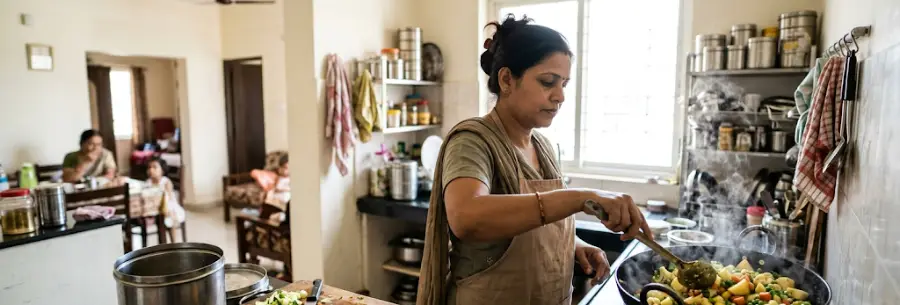
Foods to Avoid on a Sattvic Diet
- meat, fish and eggs (in the traditional version)
- very spicy, very salty or deep-fried foods
- packaged, highly processed foods and fast food
- stale, reheated or leftover food kept for long
- alcohol and strong stimulants
- in strict versions: onion, garlic, mushrooms and fermented foods
Note that there is no medical need to avoid onion or garlic. These foods are healthy for most people. Avoiding them is a part of the tradition, so follow it if it matters to you, but do not believe claims that they are harmful.
What modern nutrition says
How does the sattvic diet match with official advice? In many ways, very well. The NHS vegetarian diet guidance gives this advice, which fits sattvic eating nicely:
- eat at least five portions of fruit and vegetables a day (a portion is about 80 g)
- make starchy foods, preferably wholegrain, just over a third of what you eat
- choose pulses, nuts and seeds as protein sources
- use unsaturated oils and spreads, and use all fats sparingly
- limit foods high in fat, salt and sugar
The tradition of cooking from scratch also helps you avoid ultra-processed food, which is a good thing.
But there is one place where tradition and modern advice differ: ghee. Ghee is a pure saturated fat. The NHS saturated fat guidance lists ghee, butter, cheese and cream among foods high in saturated fat and says the limit is about 30 g a day for men and 20 g for women. Too much saturated fat can raise cholesterol and increase the risk of heart disease. So a little ghee is fine, but “more is better” is not true. We explain this in our guide to ghee benefits.
Nutrients to watch
A well-planned vegetarian diet can be healthy, but some nutrients need attention. The NHS highlights these:
- Vitamin B12. It occurs naturally only in animal products. If you eat dairy regularly, you may get some, but many vegetarians and all vegans need fortified foods or a supplement. Ask your doctor about a blood test.
- Iron. Plant iron is harder to absorb. Eat pulses, dark green leafy vegetables, nuts and wholemeal foods with a source of vitamin C, such as lemon or tomato.
- Calcium. Milk, curd and paneer help. Non-dairy sources include leafy greens and calcium-set tofu.
- Omega-3. Flaxseed, chia, walnuts and rapeseed oil provide some, but they may not give the same heart benefits as oily fish.
- Protein. Pulses, nuts, seeds, dairy and tofu all help. Eat a variety.
- Vitamin D. Many people need a supplement in winter. See our guide to vitamin D in winter.
Sattvic Diet Plan: A Sample Day
- On waking: a glass of warm water.
- Breakfast: porridge or poha with fruit, and a handful of nuts.
- Lunch: dal, brown rice or roti, a vegetable dish and a small bowl of curd.
- Snack: fruit, or roasted chana, with herbal tea.
- Dinner: light khichdi with vegetables, and a spoon of ghee.
- Before bed: a cup of warm milk, if it suits you.
That is about as simple as it gets, and it is full of fibre, plant protein and variety.
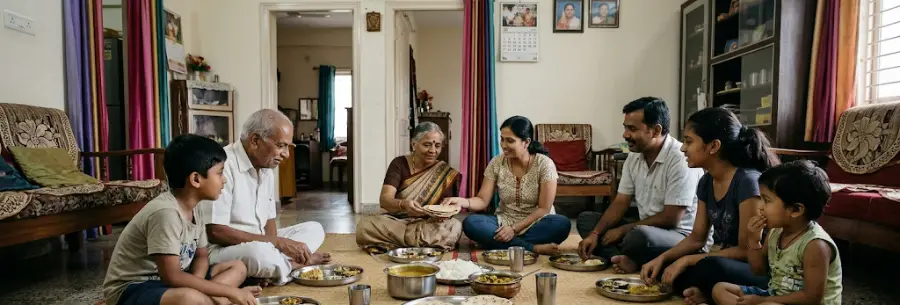
Cooking and eating habits
In the tradition, how you eat matters as much as what you eat. These habits are easy to adopt:
- Eat when you are hungry, and stop before you are full.
- Sit down. Avoid eating while walking or driving.
- Put your phone away. Eat slowly and chew well.
- Eat at regular times.
- Cook fresh food when you can, and avoid reheating again and again.
- Say a short thanks before the meal, if that is your tradition.
- Do not eat when you are very angry or upset. Wait a few minutes.
Some of this matches modern ideas of mindful eating, which can help you notice hunger and fullness.
Sattvic Diet Shopping List for Beginners
- rice, oats, wholewheat flour, millet
- moong dal, masoor dal, chickpeas, rajma
- seasonal vegetables: gourd, carrots, spinach, pumpkin, beans
- apples, bananas, oranges, pomegranate, seasonal fruit
- almonds, walnuts, pumpkin seeds, sesame seeds
- milk, curd, paneer, a small jar of ghee
- turmeric, cumin, coriander, fennel, cardamom, ginger
- herbal tea and fresh tulsi if you can
Buy a little at a time, so everything stays fresh.
Who should be careful
The sattvic diet can be healthy, but speak to a doctor or dietitian before you start if any of these apply:
- You are pregnant, breastfeeding or trying to conceive. You need enough iron, B12, calcium, iodine and other nutrients.
- You are feeding a child or teenager. Children need enough energy, protein and fats.
- You have diabetes, kidney disease or another condition that needs a planned diet.
- You take medicines that interact with foods.
- You have, or have had, an eating disorder. Rules about “pure” and “impure” foods can make this worse.
- You are underweight, or lose weight quickly.
- You are elderly with a small appetite.
Common myths
- Myth: it cures disease. No diet cures diseases like cancer or diabetes. Diet can support health alongside medical care.
- Myth: onion and garlic are harmful. They are healthy foods for most people. Avoiding them is a tradition, not a medical rule.
- Myth: sattvic means no fat. Small amounts of healthy fats, such as nuts, seeds and a little ghee, are part of it.
- Myth: it is expensive. It can be among the cheapest ways to eat, based on lentils, rice and seasonal vegetables.
- Myth: you must follow every rule. A flexible approach you can keep is better than a strict one you abandon.
Sattvic eating through the seasons
Ayurveda teaches that food should change with the season, an idea called ritucharya. You do not need to follow it perfectly, but the thinking is practical and easy to use.
- Summer: choose cooling, watery foods such as cucumber, melon, coconut water, buttermilk and mint. Eat lighter meals.
- Monsoon and autumn: eat freshly cooked, warm, easily digested food. Take extra care with raw salads and street food, because stomach infections are more common.
- Winter: warm soups, khichdi, root vegetables, nuts and a little ghee suit the cold. Our winter routine guide goes deeper.
- Spring: favour lighter, drier foods such as barley, bitter greens and moong, and reduce very heavy, sweet dishes.
The simple rule is: eat what is fresh and local to your season. That also keeps cost low and variety high.
How to move to a sattvic diet slowly
Sudden changes rarely last. A gentle change is kinder to your body and to your family. Try this plan over about four weeks:
- Week 1: cook one fresh meal a day from scratch. Replace one packaged snack with fruit or nuts.
- Week 2: add a dal or pulse dish daily, and eat at least five portions of fruit and vegetables.
- Week 3: cut back on deep-fried food and sugary drinks. Keep your evening meal light.
- Week 4: add the eating habits: sitting down, eating slowly and no phone at the table.
If you slip, simply continue the next day. Nobody is graded on this.
Easy Sattvic Diet Recipes to Try
You do not need special ingredients. Here are three simple dishes that fit the style.
- Vegetable khichdi: cook rice and moong dal together with turmeric, cumin, carrot, peas and a little ginger. Finish with a teaspoon of ghee.
- Lauki or pumpkin sabzi: sauté cubed gourd with cumin and coriander, cover and cook until soft. Add a pinch of salt only.
- Fruit and nut bowl: chopped seasonal fruit with a few soaked almonds, walnuts and pumpkin seeds.
All three are quick, cheap and gentle on digestion. Add a little lemon or tomato to the dal meals to help your body absorb iron.
What research can and cannot say
It is fair to say that plant-rich diets are linked with good health in many studies, and the NHS explains that a balanced vegetarian diet can meet nutritional needs. That supports the general direction of the sattvic diet.
It is not fair to say that studies prove the specific claims of the tradition, such as that a sattvic diet makes the mind calmer or raises spiritual awareness. Those ideas come from philosophy and personal experience, not from clinical trials. Many people do report feeling lighter and more focused when they eat simple, fresh food, and that is a perfectly good reason to try it, as long as you are honest about what it can and cannot prove.
If you have a health condition, treat the sattvic diet as a way of eating, not a treatment, and keep following your doctor’s advice.
Simple tips for eating out and for families
Eating sattvic does not mean staying home. At a restaurant, look for dal, plain rice or roti, vegetable curries cooked without too much oil, and fresh salad. Ask for less oil and less chilli if you can.
In a family where others eat differently, cook one base meal and let people add their own extras. For example, make dal and rice for everyone, and let others add eggs or paneer on the side. This keeps the kitchen peaceful, which is also a sattvic idea.
For children and teenagers, avoid strict rules about “pure” and “impure” food. Offer a variety of healthy dishes and let meals be relaxed and enjoyable.
Sattvic Diet FAQs
Is the sattvic diet healthy?
It can be, because it is rich in vegetables, fruit, wholegrains and pulses. Plan for B12, iron, calcium and omega-3, and keep ghee small.
Can I lose weight on a sattvic diet?
Many people eat fewer processed foods on it, which may help. But weight depends on total food, activity and sleep, and there is no guarantee.
Is egg allowed in a sattvic diet?
In the traditional version, no. Some modern versions allow eggs. Choose what fits your beliefs and nutrition needs.
Is tea or coffee sattvic?
Strong tea and coffee are usually called rajasic, because they are stimulating. Herbal teas are preferred. You can follow your own comfort level.
Can children follow a sattvic diet?
Children can eat a vegetarian diet if it is well planned. Talk to a doctor or dietitian to make sure they get enough energy and nutrients.
How do I start a sattvic diet?
Start with one meal a day. Replace a processed meal with a simple, fresh one, such as dal and vegetables. Add a second meal after a week or two.
Further reading
This article is for general education and cultural information, not medical advice. If symptoms persist or worry you, please speak with a qualified healthcare professional. Images on this page were created with AI.