

Few supplements have gone from a niche Ayurvedic herb to a shop-shelf regular as quickly as ashwagandha. Walk into almost any pharmacy or health store in the UK, US or Europe and you will find it in capsules, powders, gummies and drinks, promising calmer days and deeper sleep. If you have been wondering whether the ashwagandha benefits you read about online are real, you are asking the right question.
The honest answer sits somewhere between hype and dismissal. There is real research on this root, some of it encouraging, but much of it is small, short and uses very different products. This guide walks through what the evidence says, what it does not say, who should steer clear, and how to think about it as an ordinary person with a busy life, not a lab volunteer.
The short version: Ashwagandha benefits are best supported for stress and sleep, but the evidence comes from small, short studies with mixed products. It is usually tolerated for up to about three months, rarely linked to liver injury, and not suitable in pregnancy, with thyroid or autoimmune conditions, or alongside certain medicines. Talk to a doctor before starting, and treat it as an extra, not a treatment.
Table of Contents
What ashwagandha actually is
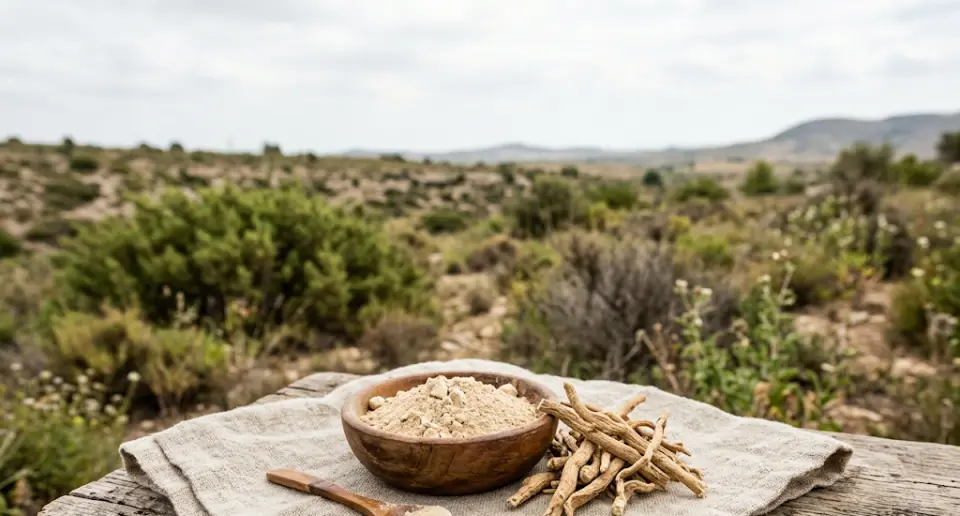
Ashwagandha (Withania somnifera) is an evergreen shrub that grows in parts of India, Africa and the Middle East. It is sometimes called Indian ginseng or winter cherry. In Ayurveda, the traditional medical system of India, the root has been used for centuries as a rasayana, a tonic thought to support vitality and resilience. The name is usually explained as meaning the smell of a horse, which refers to the root’s earthy aroma.
Modern supplements use the root, the leaves, or extracts of both. The plant contains compounds called withanolides, which researchers believe account for much of its biological activity, including possible anti-inflammatory and antioxidant effects. The US National Center for Complementary and Integrative Health (NCCIH) notes that it is promoted for stress, anxiety, sleep, male fertility and athletic performance.
That list of promises is long. The evidence behind each one is not equally strong, and that is the key to reading everything else in this article.
Ashwagandha benefits: what the research suggests
When people talk about ashwagandha benefits, they usually mean a handful of specific claims. According to NCCIH, some preparations may help with stress and insomnia, evidence on anxiety is unclear, and there is limited early evidence for effects on testosterone and sperm quality after two to four months of use. For many other uses, including asthma, athletic performance, thinking skills, diabetes, menopause symptoms and female infertility, the evidence is not strong enough to draw any conclusion. The same goes for claims that it helps with COVID-19.
Why is the picture so patchy? A few reasons come up again and again:
- Small trials. Many studies involve dozens, not thousands, of people, which makes results easy to over-read.
- Short duration. Most last somewhere from a few weeks to a few months, so long-term effects are unknown.
- Different products. Root extracts, leaf extracts and whole-herb powders differ in strength, and trials rarely use the same one.
- Self-reported outcomes. Stress and sleep are usually measured by questionnaires, which can be influenced by expectation.
- Commercial funding. Some trials are paid for by the companies that sell the extract being tested, which is not automatically a problem but deserves attention.
None of this means ashwagandha does nothing. It means that you should hold the benefits loosely, and choose accordingly.
Ashwagandha benefits for stress and anxiety
Stress is the most common reason people try ashwagandha. Several small randomised trials have compared standardised root extracts to placebo in adults who report feeling stressed, and some found lower scores on stress questionnaires and, in a few cases, lower levels of the stress hormone cortisol. NCCIH summarises the stress evidence as promising for some preparations.
Anxiety is a different story. Anxiety disorders are medical conditions that can be serious, and NCCIH describes the evidence for ashwagandha in anxiety as unclear. If you live with persistent worry, panic or a sense of dread, an herbal supplement is not an adequate answer. Please speak to a GP or other healthcare professional, because effective treatments exist, including talking therapies and, where appropriate, medication.
What if you simply feel frazzled by work and family? In that case, a supplement is one small lever among many. Daily routines that lower the baseline load on your nervous system, such as a steady wake time, some daylight, slow breathing and a proper wind-down, often matter more. You can find practical versions in our guides to natural stress relief with Ayurveda and alternate nostril breathing.

Ashwagandha benefits for sleep
Sleep is the second big claim. In the trials NCCIH reviews, some ashwagandha preparations seemed to help people with insomnia fall asleep a little faster or sleep a bit better, though the studies are small. A few trials in healthy adults with sleep complaints reported modest improvements in how people rated their sleep quality.
Keep two things in mind. First, the effect, where it shows up, is modest, not the kind of change a person with long-standing insomnia would describe as a cure. Second, the herb can itself cause drowsiness, which is why NCCIH lists sedatives among the medicines that may interact with it. If you take sleeping tablets, anti-anxiety medicines or anything else that makes you sleepy, do not add ashwagandha without a conversation with your doctor or pharmacist.
If poor sleep is your main problem, start with the basics. The NHS recommends regular sleep and wake times, a cool, dark bedroom and winding down before bed, and our ayurvedic bedtime routine puts those ideas into an easy order. Long-term difficulty sleeping deserves a medical check, because conditions such as sleep apnoea, thyroid disease and depression can all be involved.
Ashwagandha, testosterone and fertility
Ashwagandha is also widely marketed to men. NCCIH reports limited evidence that it may increase testosterone and improve sperm quality after two to four months. The word that matters there is limited. The studies are small, and effects on fertility outcomes, such as how often couples actually conceive, are not well established.
There is an important safety flip side. Because ashwagandha may raise testosterone, NCCIH advises that people with hormone-sensitive prostate cancer should avoid it. Anyone being treated for a hormone-related condition should treat the herb as a medicine and ask their specialist first.

Side effects and safety
Most healthy adults who take a reasonable dose of a reputable product tolerate it. NCCIH states that ashwagandha may be safe for short-term use, up to about three months, but long-term safety has not been established. The commonly reported side effects are mild:
- drowsiness or feeling slightly sedated
- upset stomach
- diarrhoea
- vomiting
A more serious concern is the liver. Case reports have linked ashwagandha supplements to liver injury. This appears to be rare, but it is real enough that health regulators in some countries have taken notice. Warning signs include yellowing of the skin or eyes, dark urine, pale stools, unusual tiredness, nausea or itching. If you notice any of these, stop the supplement and see a doctor promptly.
Supplements are also regulated differently from medicines. In the United States, for example, NCCIH points out that the FDA does not approve dietary supplements before they go on sale, and manufacturers are responsible for the safety and labelling of their products. In the UK and EU, food supplements follow food law rather than medicines law, so a label can make gentle-sounding claims without the proof a medicine would need.
Who should not take ashwagandha
NCCIH lists several groups who should avoid ashwagandha, and common sense adds to that list. Please check with a doctor first, and in many cases skip it altogether, if any of these apply to you:
- You are pregnant or breastfeeding. Safety has not been established, and some traditional sources warn against it in pregnancy.
- You have an autoimmune condition or take immunosuppressants. The herb may affect immune activity.
- You have thyroid disease or take thyroid medicine. It may alter thyroid hormone levels.
- You have diabetes or take blood sugar medicines. It may lower blood sugar.
- You take blood pressure medicines. It may lower blood pressure further.
- You take sedatives or anti-seizure medicines. The effects may add together.
- You have a hormone-sensitive condition, such as hormone-sensitive prostate cancer.
- You have surgery scheduled. Many doctors advise stopping herbal supplements ahead of an operation.
- You have had liver problems. Given the rare reports of liver injury, extra caution is wise.
If you are unsure, bring the bottle to a pharmacist. They can check it against your medicines in a couple of minutes.
How people use it in real life
In practice, most people meet ashwagandha in one of three forms: a capsule or tablet, a powder stirred into a drink, or a ready-made product such as a gummy or a tea. Traditional Ayurvedic practice often mixes the root powder into warm milk with a little honey or spice, and that ritual may explain some of the calm people report. A warm drink in a quiet evening hour is relaxing before any herb is added, so some reported ashwagandha benefits may come partly from the ritual itself.
Doses differ widely between studies and between products, and NCCIH does not give a recommended amount. That is exactly why following the label of a single, well-made product, and not stacking several, is a sensible rule. More is not better, and it raises the chance of side effects.
How to choose a product without being fooled
The supplement aisle is crowded, and labels can be confusing. A few checks help you filter out the worst offenders:
- Look for independent testing. Third-party seals from testing organisations show the product has been checked for what is on the label and for contaminants.
- Read the extract details. The label should name the part of the plant (root or leaf) and the extract type, and ideally the percentage of withanolides.
- Beware of miracle claims. Any product that promises to cure anxiety, balance hormones or boost immunity is overselling.
- Avoid long ingredient lists. Blends with many herbs make it hard to know what is helping or causing a reaction.
- Be careful with imported products. NCCIH warns that some Ayurvedic products have contained heavy metals such as lead, mercury or arsenic, so buy from sellers who publish test results.
- Keep the packaging. If you ever have a reaction, the batch number helps your doctor and the regulator.
A cautious way to try it
Suppose you have spoken to a doctor or pharmacist, nothing on the avoid list applies to you, and you still want to try it. A reasonable approach looks like this:
- Choose one well-reviewed, independently tested product and follow its label.
- Start at the lowest suggested dose, and take it in the evening if it makes you drowsy.
- Keep a simple note for a few weeks: how you sleep, how stressed you feel, and any side effects.
- Do not combine it with new sleep aids or alcohol.
- Stop after about eight to twelve weeks and see how you feel, in line with the short-term safety window NCCIH describes.
- Stop right away and see a doctor if you notice yellow skin or eyes, dark urine, severe stomach pain or any alarming symptom.
Judge it by whether your life feels easier, not by whether a bottle says it should. If you notice no difference after a couple of months, that is useful information too. You are free to stop. The real ashwagandha benefits, if there are any, show up in how your days feel.
Food-first habits that do more than any herb
It is tempting to hope that a small capsule will fix a large lifestyle problem. In reality, the habits around the capsule matter more. Compared with these, ashwagandha benefits are small. A few habits that have solid support behind them:
- Move most days. The NHS recommends at least 150 minutes of moderate activity a week for adults, which supports mood and sleep.
- Keep a regular schedule. A steady wake time anchors your body clock. Our guide to an ayurvedic morning routine shows a simple way to start.
- Eat enough fibre and whole foods. Steady meals help steady mood and energy.
- Limit late caffeine and alcohol. Both disrupt sleep, even when they seem to help you relax.
- Make time to switch off. Walks, music, friends and quiet time are real stress relievers.
If you want more ideas on feeling steadier without stimulants, see our piece on natural daily energy without caffeine.
Questions people ask
Is ashwagandha safe to take every day?
For many healthy adults, daily use for a short period, up to about three months according to NCCIH, appears to be tolerated. Safety beyond that is not established, and rare liver injury has been reported. If you plan to use it for longer, check in with a doctor, especially if you take other medicines.
How long does ashwagandha take to work?
In the studies, benefits for stress and sleep, where they appeared, showed up after several weeks of daily use, not after a single dose. Studies of testosterone looked at two to four months. Do not expect an instant calming effect, and be wary of products that promise one.
Can I take ashwagandha with antidepressants or anxiety medicine?
Do not combine them on your own. NCCIH lists sedatives and several other medicine classes as possible interactions. Ask your prescriber or pharmacist, who can check your specific medicines.
Is ashwagandha the same as ginseng?
No. It is sometimes called Indian ginseng, but it is a different plant with different compounds. The nickname refers to its traditional use as a tonic, not to any botanical relationship.
Should I take ashwagandha in the morning or at night?
There is no single rule. Because it can cause drowsiness in some people, many choose the evening. If it makes you feel sluggish, avoid taking it before driving or work that needs sharp attention.
Is it a replacement for therapy or medication?
No. If you live with anxiety, depression or insomnia, an herbal supplement is not a substitute for proper care. Talk to a healthcare professional about options that have strong evidence.
Related reading on MyHealthLogy
- Magnesium glycinate for sleep and stress
- Turmeric benefits and safety
- Ayurvedic morning routine for beginners
Further reading
- NCCIH: Ashwagandha fact sheet
- NCCIH: Ayurvedic Medicine In Depth
- NHS Every Mind Matters: How to fall asleep faster and sleep better
- NHS: Physical activity guidelines for adults aged 19 to 64
This article is for general education and is not medical advice. If symptoms persist or worry you, please speak with a qualified healthcare professional. Images on this page were created with AI.