
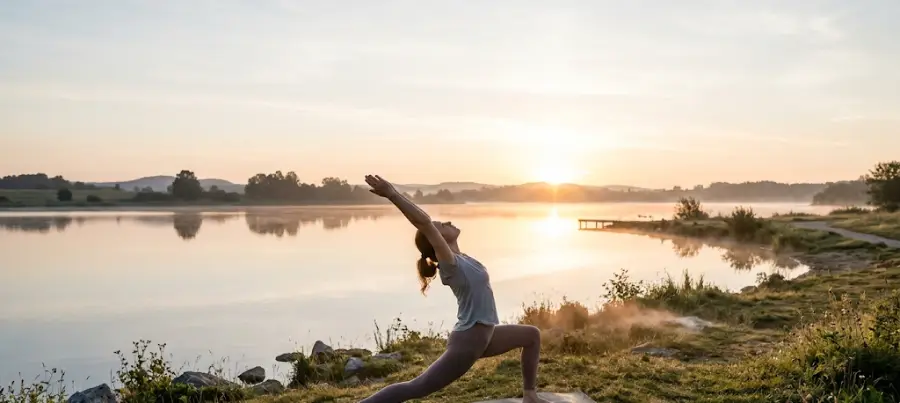
There is a good reason Surya Namaskar is the most popular yoga sequence in the world. It takes only a few minutes. It needs no equipment, only a mat or a towel. And it begins with a beautiful idea: greeting the sun. If you are curious about Surya Namaskar benefits, you are in the right place.
In this guide, we keep everything simple. You will learn the 12 steps, the traditional names of the sun, how to practise safely, what research says about yoga, and where the Vedic roots really lie. We will also be honest about what is old, what is modern and what science can and cannot promise.
The short version: Surya Namaskar (sun salutation) is a flowing sequence of 12 yoga poses linked with breath. The idea of honouring the sun is Vedic, while the sequence as practised today was popularised in the 20th century. Research on yoga suggests benefits for stress, anxiety and low-back pain. Start slowly with 3 to 6 rounds, and check with a doctor if you are pregnant, older, injured or have a health condition.
▶ Watch the Web Story: Surya Namaskar Benefits
Table of Contents
What Is Surya Namaskar (Sun Salutation)?
Surya means the sun. Namaskar means a respectful greeting, the same word as “namaste”. So Surya Namaskar means “greeting the sun”.
In practice, it is a chain of 12 postures that flow into one another. You stretch forward, stretch back, press your hands into the floor, and lift your chest. Each movement is paired with an inhale or an exhale, and that rhythm is the heart of Surya Namaskar benefits for the mind. One full round is usually 24 movements, because you go through the sequence on each side.
Many people do it at sunrise, but you can do it at any time of day on an empty or light stomach.
The Vedic roots: honouring the sun
The sun is deeply present in the Vedas. Several hymns of the Rigveda praise Surya as the one who lights the world, watches over all beings and drives away darkness. A well-known example is the Surya Sukta in the first book of the Rigveda. The Gayatri Mantra, which you can read about in our Gayatri Mantra guide, is also addressed to Savitr, the sun in its inspiring form.
Here is a verse from that Rigveda hymn to Surya:
उदु त्यं जातवेदसं देवं वहन्ति केतवः । दृशे विश्वाय सूर्यम् ॥
udu tyaṃ jātavedasaṃ devaṃ vahanti ketavaḥ | dṛśe viśvāya sūryam ||
Rigveda 1.50.1
Meaning: His rays lift up the all-knowing god Surya, so that everyone may see.
So the spirit of the practice, that is, respect for the sun and gratitude for light, is old and Vedic. If you want the bigger picture, our guide to the four Vedas will help.
What is old and what is modern
To keep this article honest, we should separate the idea from the exact exercise. Historians of yoga note that the Surya Namaskar sequence as we practise today, with its set of 12 flowing poses, became widely popular in the early 20th century. It is not described in this exact form in the Vedic hymns.
That does not make it less valuable. Traditions grow and change. It simply means that when someone says “this exact sequence is thousands of years old”, you can politely say, “the reverence for the sun is, but the sequence is more recent”. Both can be true, and being clear about it builds trust.
Surya Namaskar 12 Steps With Names
Here are the 12 positions in order, with simple English names:
- 1. Pranamasana (prayer pose): stand tall, palms together at the chest.
- 2. Hasta Uttanasana (raised arms pose): inhale, lift the arms, and arch back gently.
- 3. Padahastasana (forward fold): exhale, bend forward from the hips. Bend your knees if needed.
- 4. Ashwa Sanchalanasana (equestrian pose): step one leg back, lift your chest.
- 5. Parvatasana (mountain or downward dog): lift the hips, make an upside-down V.
- 6. Ashtanga Namaskara (eight-limbed pose): lower the knees, chest and chin to the floor.
- 7. Bhujangasana (cobra pose): slide forward and lift the chest gently.
- 8. Parvatasana: lift the hips back into the mountain pose.
- 9. Ashwa Sanchalanasana: step the other leg forward.
- 10. Padahastasana: bring both feet together and fold forward.
- 11. Hasta Uttanasana: rise up with arms overhead.
- 12. Pranamasana: return to the prayer pose.
These names are Sanskrit, but you do not need to memorise them. It is the flow that matters.
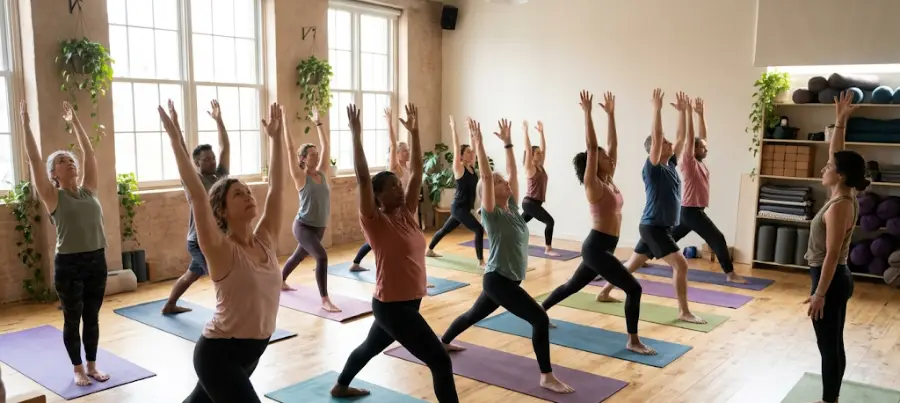
The 12 names of the sun
In the traditional way of practising, each of the 12 positions is paired with a name of the sun, spoken or thought as you move. These are:
- Om Mitraya Namah (to the friend of all)
- Om Ravaye Namah (to the shining one)
- Om Suryaya Namah (to the one who stirs activity)
- Om Bhanave Namah (to the one who illumines)
- Om Khagaya Namah (to the one who moves through the sky)
- Om Pushne Namah (to the nourisher)
- Om Hiranyagarbhaya Namah (to the golden womb of creation)
- Om Marichaye Namah (to the one with rays of light)
- Om Adityaya Namah (to the son of Aditi)
- Om Savitre Namah (to the stimulating power)
- Om Arkaya Namah (to the one worthy of praise)
- Om Bhaskaraya Namah (to the one who gives light)
Adding the names is optional. If you are new to yoga, focus on the movement and the breath first. Over time, you can add the names, or just think “thank you” to the sun.
How to Do Surya Namaskar Step by Step
A good routine is simple, clear and gentle. Follow these steps:
- Prepare. Use a non-slip mat, wear loose clothes, and keep your phone away.
- Warm up. Roll your shoulders, circle your wrists and ankles, and take a few deep breaths.
- Start with prayer pose. Stand with feet together, close your eyes for a moment, and feel your weight on both feet.
- Link breath and movement. Inhale as you rise or open the chest. Exhale as you fold or lower.
- Move slowly. A smooth, unhurried round is better than a fast one.
- Finish with rest. Stand or lie down for a minute. Notice your heartbeat settling.
Do not push through pain, because the real Surya Namaskar benefits come from steady practice, not from force. A stretch should feel like a stretch, not like a sharp or burning feeling.
Surya Namaskar for Beginners: A Two-Week Plan
- Days 1 to 3: 2 slow rounds. Learn the order.
- Days 4 to 7: 3 to 4 rounds. Add breathing.
- Week 2: 4 to 6 rounds. Add the sun names if you like.
- After two weeks: build up slowly toward 6 to 12 rounds if your body feels good.
Some days you will feel stiff. That is fine. Do fewer rounds, and be kind to your body.
Yoga for Stress, Anxiety and Pain: What Research Says
Research on Surya Namaskar itself is limited, so we look at yoga in general. The US National Center for Complementary and Integrative Health (NCCIH) summarises the evidence well:
- Back pain: a 2022 review of 21 studies found yoga slightly better than no exercise for low-back pain, although the difference may not matter much to patients. Several guidelines list yoga among suggested non-drug options.
- Stress: a 2020 review of 12 recent studies reported beneficial effects on perceived stress in healthy adults.
- Anxiety: a 2019 review of 38 studies found a substantial benefit on anxiety symptoms, but for diagnosed anxiety disorders, the evidence is limited, and yoga was less helpful than cognitive behavioural therapy in one study.
- Sleep: yoga has helped sleep in several studies of different groups, such as older adults and cancer patients.
In short, yoga is a safe and sensible way to move, relax and feel better for many people. It is not a cure, and it should not replace treatment.
Surya Namaskar Benefits You Can Reasonably Expect
Here is a realistic list. It does not promise miracles, but these are things many people notice:
- A flexible start to the day. The mix of forward and back bends helps loosen the spine, shoulders and hips.
- A calmer mind. Slow breathing with movement is a gentle way to reduce tension.
- Light physical activity. The NHS recommends adults do at least 150 minutes of moderate activity a week. A fast-paced set of rounds can count toward it, though a slow, gentle pace may be lighter.
- A steady routine. A short daily habit builds a feeling of structure.
- Body awareness. You learn where you are tight and where you are strong.
Be careful with exaggerated claims you may see online, such as “burns huge calories”, “cures thyroid” or “detoxifies the body”. Those are not supported by good evidence. The truth is simpler and still nice: a short, regular practice is good for your body and mind.
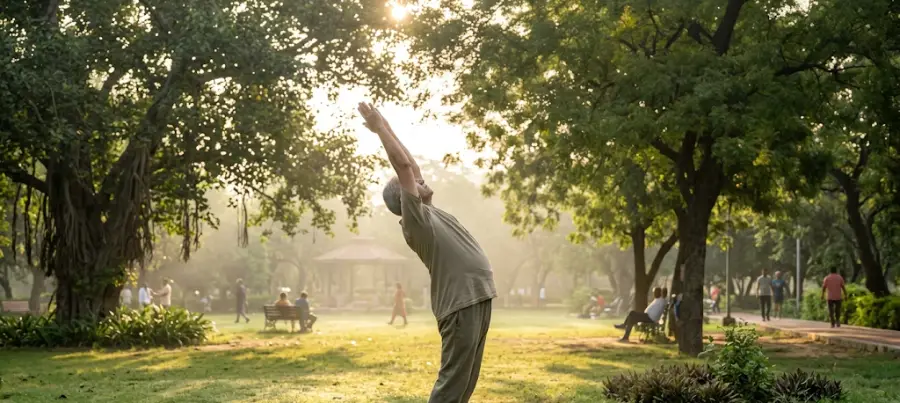
Who should be careful
Yoga is generally safe when practised properly. The most common problems are sprains and strains, especially in the knees and lower legs. NCCIH also notes that people over 65 have a higher rate of yoga-related emergency visits, and learning without supervision is linked with higher risk. Please take care if any of these apply:
- You are pregnant. Check with your doctor, and avoid deep back bends, lying on your back for long periods and hot rooms.
- You are older, or have balance problems.
- You have a knee, hip or lower back injury, or lumbar spine disease.
- You have severe high blood pressure, heart disease or glaucoma. Avoid long head-down positions and ask your doctor first.
- You have wrist pain. Use fists or forearms in plank and downward dog, or choose a standing version.
- You feel dizzy, short of breath, or have chest pain. Stop immediately and seek advice.
If you are a complete beginner, learning from a qualified instructor, even for a few sessions, is a good investment.
Common mistakes
- Rushing. Speed makes it a workout, but it increases the risk of strain.
- Locking the knees or back. Keep a soft bend where needed.
- Holding the breath. Keep breathing steadily.
- Forcing the cobra. Lift only as far as is comfortable, using the back, not by pushing on the hands.
- Skipping the warm-up. Cold muscles are less forgiving.
- Doing it on a full stomach. Wait two to three hours after a heavy meal.
Easy Surya Namaskar for Stiff Bodies and Older Adults
You can adapt Surya Namaskar to your body and still enjoy Surya Namaskar benefits. Here are some gentle ideas:
- Chair version. Sit on a sturdy chair. Raise your arms, fold forward gently, return up, and bring your hands to prayer.
- Wall version. Stand facing a wall, place your hands on it, and step back to do a gentle standing fold.
- Knee-down version. Skip the plank, and lower your knees to the floor before the cobra.
- Fewer rounds. Two or three slow rounds are plenty.
The aim is to feel better, not to look like a picture.
Best Time to Do Surya Namaskar
Tradition suggests early morning, facing the rising sun. It is a lovely time because the air is cool and the day has not yet begun. If you wake with the morning light, our guide to Brahma Muhurta may also interest you. But if mornings are impossible, evening is fine too. A little warm-up first is wise in cold weather. Practise in a clear, quiet space. Avoid very hot rooms.
If you enjoy sound as well as movement, you can end your practice with a few rounds of Om chanting, which is a natural partner to the sun salutation.
Surya Namaskar benefits for different lifestyles
The best way to understand Surya Namaskar benefits is to picture your own day. A few examples show how the same short routine can fit very different lives:
- Office workers. Sitting for hours tightens the hips and shoulders. A few rounds before work, or a mini-version at your desk, can loosen them.
- Students. Five minutes of movement before study helps many people feel awake and ready to focus.
- Parents. Two quick rounds before the household wakes up can be your only quiet time. Even that small pause counts.
- Older adults. A chair or wall version improves comfort and confidence in movement, without risky poses.
- People who feel stressed. The mix of breath and gentle movement is a calm way to reset, though it is not a substitute for professional help if stress is severe.
Quick checklist before you start
- I have eaten lightly or not at all in the last two to three hours.
- I am wearing loose clothes and standing on a non-slip surface.
- I have warmed up my neck, shoulders, wrists and ankles.
- I know my limits, and I will stop if something hurts.
- I have water nearby, and I will rest if I feel dizzy.
- If I have a health condition, I have checked with my doctor.
Keep this list nearby for the first week. After that, it becomes a habit.
A short closing thought
The sun rises every day without asking for anything. A short salutation in return is a small way to say thank you, and to begin the day with a straight spine and a quiet mind. That, in the end, is what Surya Namaskar benefits most people most: a simple, regular moment of attention. Start gently, stay curious and keep your doctor in the loop if you have any health concerns.
Surya Namaskar FAQs
How many rounds of Surya Namaskar should I do daily?
Beginners can start with 2 to 3 rounds and slowly build up to 6 to 12. Quality is more important than the number.
Is Surya Namaskar good for weight loss?
It is a form of exercise and can help you stay active, but weight depends mostly on overall food, activity and sleep. It is not a magic solution.
Can I do Surya Namaskar every day?
Many people do. If you feel pain or tiredness, take a rest day. Listen to your body.
Is Surya Namaskar in the Vedas?
The Vedas contain hymns that praise Surya, but the 12-pose sequence as practised today became popular in the 20th century.
Can pregnant women do Surya Namaskar?
Only with a doctor’s approval and a trained teacher, with changes. Avoid deep back bends, long periods lying on the back and hot rooms.
Should I do Surya Namaskar before or after breakfast?
Before breakfast, on an empty or light stomach, is common. Wait a few hours after a heavy meal.
What should I eat after Surya Namaskar?
Water first. Then a light, balanced breakfast, such as porridge with fruit or eggs and wholegrain toast, is a good choice.
Can children do Surya Namaskar?
Yes, in a playful way, with an adult nearby. Keep it short and fun, and avoid forcing deep stretches.
How long does one round take?
A slow, mindful round takes about one to two minutes. Six rounds take around ten minutes.
Further reading
This article is for general education and cultural information, not medical advice. If symptoms persist or worry you, please speak with a qualified healthcare professional. Images on this page were created with AI.